Wednesday, 3 June 2020

World-wide protests against racism

George Floyd death: More large protests in US but violence falls

Tens of thousands of people have demonstrated, mainly peacefully, across the United States for an eighth night following the death of African-American George Floyd in police custody.
One of the biggest protests, joined by Floyd's relatives, took place in his hometown of Houston, Texas. Many defied curfews in several cities, imposed after violence and looting in some districts on Monday night. In central Washington DC police fired tear gas late into the night. The military were again on the streets of the capital and helicopters hovered above protesters marching towards the White House.
The Floyd case has reignited deep-seated anger over police killings of black Americans and racism. Demonstrators have taken to the streets - not only to express their outrage at the treatment of Mr Floyd - but to condemn police brutality against black Americans more widely.

US cities under curfew as protests over Floyd killing rage on


Curfews were in place in dozens of cities across the United States last night as tensions continued over the killing of an African-American man by a police officer last week in Minneapolis.
New York City officials announced that an 8pm curfew would be extended for the rest of the week – the first time in 70 years that the city has been under nightly lockdown.
In Washington DC, thousands of people were demonstrating last night outside the White House, many chanting “Black Lives Matter” and “George Floyd. 
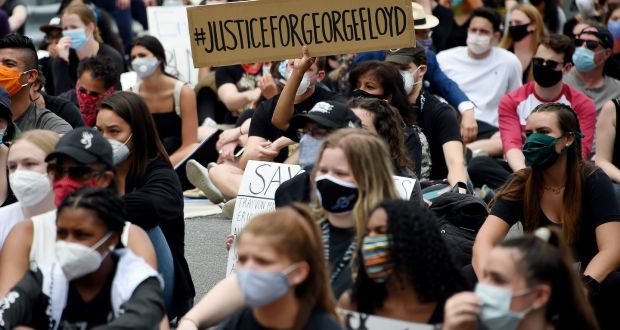
A peaceful protest against the death of George Floyd in Bethesda, Maryland. Photograph: Olivier Douliery/AFP via Getty

Tuesday, 2 June 2020

Revision. Extra activities. End of course

ACTIVITIES:
·         GOOGLE FORMS. HOW TO MAKE FASTER DECISIONS: 
·         

   GOOGLE FORMS. 
NO ONE SEEMS TO CARE ABOUT HOW DANGEROUS CROSSFIT IS: 


Thursday, 28 May 2020

Is it in the news? Or just fake news?

Key vocabulary

no news is good news
everything is OK, probably
that's news to me
I didn't know that
breaking news
new news
to break the news
to pass on news to someone

"Fake news" was not a term many people used 18 months ago, but it is now seen as one of the greatest threats to democracy, free debate and the Western order. It has been named the word of the year, raised tensions between nations, and may lead to regulation of social media. And yet, nobody can agree on what it is, how much of a problem it is, and what to do about it.

Governments and powerful individuals have used information as a weapon for millennia, to boost their support. From a campaign of disinformation to aid victory in the final war of the Roman Republic to the 20th century, different forms of communication have been by governments. Added to that, as populations became more used to mass communication, they could more easily see through it.
 Before the internet, it was much more expensive to distribute information, building up trust took years, and there were much simpler definitions of what constituted news and media, making regulation or self-regulation easier. But the rise of social media has broken down many of the boundaries that prevented fake news from spreading in democracies. In particular it has allowed anyone to create and disseminate information.

Facebook and Twitter allowed people to exchange information on a much greater scale than ever before, while publishing platforms like WordPress allowed anyone to create a dynamic website with ease. In short, the barriers to creating fake news have been undone.

After widespread criticism that the companies are failing to deal with fake news, Twitter, Facebook and Google have all announced measures to crack down on misinformation online. Facebook, which has faced the most scrutiny, says it is enlisting fact checkers to flag stories, cutting off advertising to fake news sites, and better reviewing adverts on the site. Twitter says it has become better at dealing with bots, and Google has promised better algorithms to police YouTube.

However, critics continue to argue that not enough is being done, and that the tech companies are reluctant to take action, for fear of being seen as biased.

Spotting fake news isn't easy: a Stanford study last year found that students were shockingly bad at distinguishing between different types of material online, whether paid for, fake or legitimate. Facebook has a useful list of ways to spot fake news, which include checking other sources and a site's URL.

Adapted from The Telegraph

Tuesday, 26 May 2020

Live sessions: Online meeting- Week10

Wed. 27th May, we are having another online lesson about the activities and contents for this week. Also, you will be able to solve questions about the tasks or chat informally while we are having speaking practice. If you have any problem to get through, just send me an email. Again, we´ll be using MEET, which is an app linked to your @iescantabria.net account. Just click on the link to join. See you online.

Sunday, 24 May 2020

2ESO-Week10. Revision PAST TENSES


Simple Past vs. Present Perfect Practice

Simple PastPresent Perfect
Specified time in pastUnspecified time in past
I visited Japan last year.I have visited Japan.
Finished ActionUnfinished Action
I went shopping twice last month.I have gone shopping twice this month
Finished Action + forUnfinished Action + for
He lived in Paris for two years.He has lived in London for one year.
*He is no longer in Paris.*He is still in London
Keywords: recently, since, just

1.- Fill in the blanks using the Simple Past (i.e. When did you wake up today?) or the Present Perfect (i.e. Have you gone skydiving?).
1. What  for dinner last night? (eat/you)

2.  South Africa? (visit/Mary)

3.  to work by subway this morning? (come/you)

4. What  last weekend? (do/he)

5. You work for the bank, right? How long  there? (work/you)

6. How long  in your current apartment/house? (live/you)

7. How often  swimming when you were a child? (go/you)

8. How many cups of coffee  yesterday? (drink/I)

9.  raw fish? (eat/they)

10. Where  when you were a student? (live/you)

1. What did you eat for dinner last night? (eat/you)


2. Has Mary visited South Africa? (visit/Mary)


3. Have you come to work by subway this morning? (come/you)


4. What did he do last weekend? (do/he)


5. You work for the bank, right? How long have you worked  there? (work/you)


6. How long have you lived in your current apartment/house? (live/you)


7. How often did you go  swimming when you were a child? (go/you)


8. How many cups of coffee did I drink  yesterday? (drink/I)


9. Have they eaten raw fish? (eat/they)


10. Where did you live  when you were a student? (live/you)


2.- Choose the correct option and then copy and paste in a word document to send to your teacher before Fri 29th May

  1. Peter  football yesterday.
  2. They  the car. It looks new again.
  3. Last year we  to Italy.
  4. John and Peggy  the book. Now they can watch the film.
  5. I  my friend two days ago.
  6. We  another country before.
  7. She  a new car in 2011.
  8. I'm sorry, but I  my homework.
  9.  the game of chess?
  10. The girls  their lunch yet.
Peter played football yesterday.
They have cleaned the car. It looks new again.
Last year we went to Italy.
John and Peggy have just read the book. Now they can watch the film.
I met my friend two days ago.
We have never visited another country before.
She bought a new car in 2011.
I'm sorry, but I have forgotten my homework.
Did you win the game of chess?
The girls have not eaten their lunch yet.

3.- Complete the activities and get a screenshot at the end to capture the result. Then, copy and paste in the word document to send it to your teacher.

4ESO-Week 10- Integrated skills


ACTIVITIES:
·         GOOGLE FORMS. HOW TO MAKE FASTER DECISIONS: https://forms.gle/KQS3KyupLiKXXYjT8
·         MEDIATION: Suppose you work in a Chemist. Prepare a leaflet for your English customers.  
  https://drive.google.com/file/d/1sv39CqvwatuC_qCR1rhsyHvxkKWNLJ5D/view?usp=sharing
·         WRITING-IGCSE: There is a proposal to close the swimming pool in your town and build a supermarket there instead. Here are two comments from young people:
1.       Where will we meet our friends at the weekends?
2.       My parents say it will be easier to do the shopping.
     Write an article for the local newspaper, giving your views. The comments above may give you some ideas, and you should try to use some ideas of your own.