Showing posts with label culture. Show all posts

Monday, 19 October 2026

Current affairs. Protests around Europe


Listening: Schools closed in France as students clash with police

Why are people protesting across Europe?

Amid a wave of diverse local grievances, protests have erupted across Southern and Western Europe this week, sweeping through France, Albania, Italy, Portugal, Spain, and Greece.

Demonstrations against living costs and school conditions have rocked France since late September, with many turning violent. Meanwhile, Albania has entered its fifth day of anti-government riots and protests over general economic conditions have taken place in Milan and in several cities in Portugal.

Spanish protests targeted housing affordability and the right to housing, while motor oil refinery workers in Greece gathered over demands for better workplace safety.

Wednesday, 16 September 2026

Migration, a hot debate

Food for thought: 


1. The story

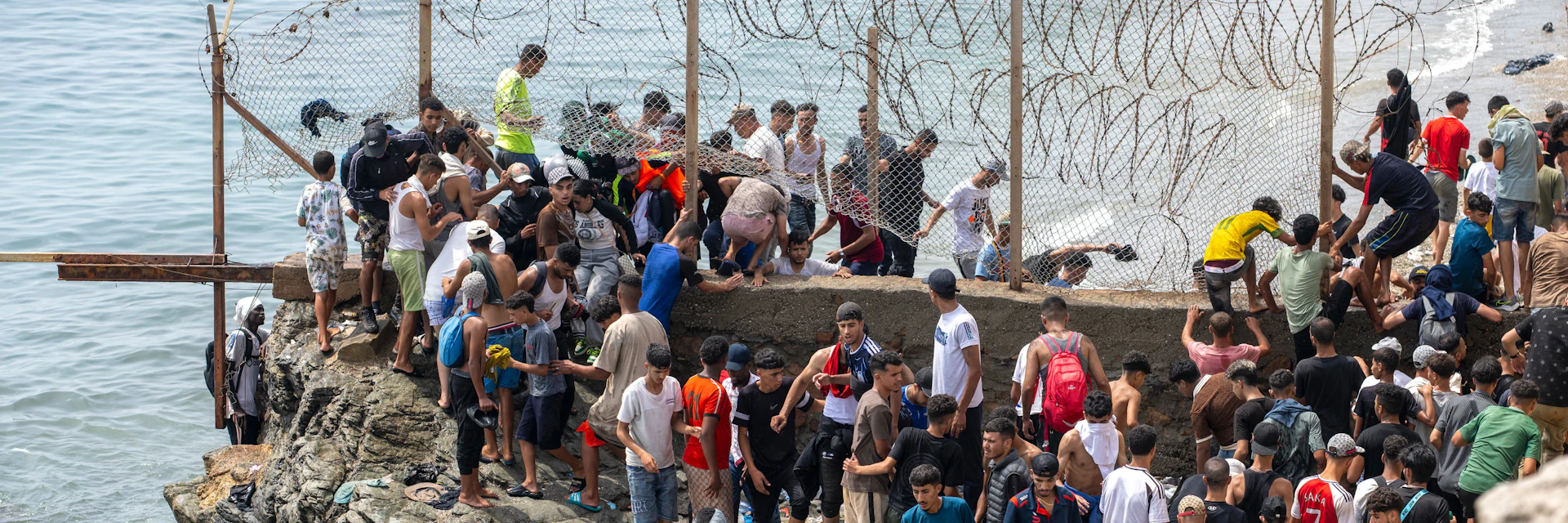
Around 70,000 migrants swam around the border from Morocco into Ceuta, part of Spain, which has a population of 80,000. Spanish authorities said almost all those who reached the enclave have now returned. At least 72 migrants died attempting the journey. Many EU leaders called for an urgent meeting, asking for the end of policies that could encourage illegal migration. But Spain says that as Ceuta is not part of mainland Spain, there was never a security threat to other EU countries.

The Ceuta migration crisis reached an unprecedented flashpoint, profoundly shifting Spanish public opinion and driving the European Union toward aggressively tighter border policies. A questionnaire examining opinion and context surrounding this crisis can be structured around the following factual pillars and recent polling insights.

The Context: The Late July/August Border Surge. A massive influx overwhelmed the Spanish autonomous city of Ceuta on the North African coast.

The Trigger: Human smuggling networks exploited and misrepresented a June Spanish Supreme Court ruling regarding "hot returns" at sea, falsely spreading rumors on social media (WhatsApp and Facebook) that the border was open. The Scale: Over the course of a single overnight period, an estimated 49,000 to 60,000 people crossed or attempted to cross into Ceuta by swimming or breaching border walls. By August, total estimates climbed over 70,000. 

The Fall-out: Spain quickly deployed its military, installed floating barriers, and swiftly returned over 70,000 migrants to Morocco. Politically, a massive internal scandal emerged in September when declassified National Intelligence Center (CNI) documents revealed that Spanish authorities had advanced warnings of the WhatsApp "call to assault" the border, leading to political finger-pointing and high-profile resignations.

2. Current Public Opinion Dynamics

Recent demoscopic data—including a comprehensive national 40dB opinion poll and the state-run September CIS Barometer—highlights a significant shift in public sentiment:Blame and Bilateral Friction: 89% of Spaniards blame Morocco for either orchestrating or allowing the mass crossing. Concurrently, an NC Report poll showed that 77% of Spaniards now view Morocco as an "enemy" or a hostile neighbor due to the crisis.Disapproval of Government Management: Close to 72% of respondents criticize the Spanish government’s handling, with the vast majority rating Prime Minister Pedro Sánchez's response as "bad" or "very bad" and too slow.Border Security over Humanitarian Concerns: The public mood has hardened significantly; 7 out of 10 Spaniards now prioritize tighter border controls over the protection of vulnerable migrants, and 82% support increasing physical fences and surveillance.Political Shifts: The crisis has fueled a surge for Spain’s right-wing opposition. For the first time this legislature, the combined voting intentions for the conservative Partido Popular (PP) and right-wing Vox surpassed the 50% mark in 40dB's polling. Furthermore, 27% of respondents name Vox as the political force most capable of handling immigration.The EU Stance: On the European level, 22 out of 27 EU member states have united to demand the European Commission further harden external border policies, floating controversial ideas such as the temporary suspension of asylum processing during large-scale border emergencies.

3. Questionnaire :

Module A: Perception of Responsibility

  • Do you believe the mass crossing was an orchestrated geopolitical maneuver by Morocco or an organic humanitarian event?
  • To what degree do you believe the Moroccan government is responsible for the migration surge in Ceuta? (None / A little / Significant / Absolute)
  • How do you evaluate the role played by social media platforms (WhatsApp, Facebook) in fueling the crisis?

Module B:Government Evaluation

  • How would you rate the Spanish central government's response to the situation? (Excellent / Adequate / Slow / Very Bad)
  • Do you agree or disagree with the deployment of the Spanish military and the implementation of floating maritime barriers in Ceuta?
  • In light of declassified intelligence warnings, do you believe the political fallout and subsequent resignations were handled appropriately?

Module C: Policy Preferences (The Humanitarian vs. Security Trade-off)

  • When managing Spain’s borders, which should be the primary objective?
  • Strengthening border fences, surveillance, and immediate returns.
  • Assuring humanitarian aid, processing asylum claims, and protecting vulnerable groups.
  • Do you support the European Union's proposal to allow member states to temporarily suspend the processing of asylum applications during sudden, mass border crossings?

Module D: Broad Societal Impact

  • How has the recent crisis in Ceuta affected your view of Spain's bilateral relationship with Morocco? (Improved / Unchanged / Worsened)
  • Which Spanish political party do you believe is best equipped to handle irregular migration moving forward?

News headlines 

Runaway online rumors sparked frantic rush by migrants to the Spanish territory of Ceuta
AP News 

How Spain's migrant crisis created a political storm - whipped up by social media
BBC News 

EU ministers to back Spain as Ceuta crisis pushes migration up the agenda
Politico 

Imagine you were moving to a new country. What would be the most important factors to take into consideration? Put these in order of importance: 

  • Cinemas/theatres/concert halls 
  • Good flats/houses 
  • Good transport systems 
  • Good schools/hospitals/universities 
  • Presence of family/friends 
  • Safe streets Parks/green areas  
  • Free press and media 
  • Democratic system/equality  
  • Language • Culture  
  • Other???  

Which of these things would most make you want to leave your home city or country? 

  • Unemployment 
  • Poor housing and services  
  • Poverty 
  • Famine 
  • War/unsafe social situation 
  • No job prospects for your skills/qualifications  
  • Government persecution 
  • Discrimination Climate 
  • Geographical location  
  • Other??
Reference websites:

Monday, 16 March 2026

St. Patrick´s Day-2026

Basically, MEDIATION has to do with solving and dealing with problems we come up with in communication in our daily life. Generally speaking, when we are asked to mediate, we have to:

  • Summarise
  • Simplify
  • Adapt
  • Paraphrase
  • Translate
  • Clarify
- Adapting the register and the language level to the receiver.
- Structuring the text/speech so that the information is conveyed in an organised way.
- Making good use of appropriate non-verbal communication skills (in spoken mediation tasks) such as gestures and eye contact.

- In 5 minutes, you will have to select the information relevant to the task, structure and adapt it to give it to the receiver in up to 2 minutes.

WRITTEN MEDIATION
In 20 minutes they will have to select, structure and adapt the information relevant to the task and write it down in between 80-100 words.
- Selecting the information to be conveyed because not all the information might be relevant.
- Deciding whether extra-cultural information is necessary for better understanding.
- They might have to explain some idioms or cultural references from the text.

SPOKEN MEDIATION
In 5 minutes they will have to select the information relevant to the task, structure and adapt it to give it to the receiver in up to 2 minutes
.
Ireland

1. Which of these statements is true?
a) Ireland is part of the United Kingdom.
b) Ireland is part of Scotland.
c) Ireland is an independent country.

2. Which colour is associated with Ireland?
a) green
b) red
c) blue

3. What is the approximate population of Ireland?
a) 5.3 million
b) 21.5 million
c) 43 million

4. Which two sports are both very popular in Ireland?
a) football and American football
b) football and Gaelic football
c) golf and baseball

5. What is ‘Guinness’?
a) a kind of beer
b) the capital of Ireland
c) a kind of Irish music

6. Which of these has not increased in Ireland since the 2000s?
a) the number of immigrants
b) foreign investment
c) the number of people leaving the country to live abroad

7. Which of these statements is true?
a) Irish people have a reputation for being talkative.
b) Ireland’s national day is called Saint Rafael’s Day.
c) It doesn’t rain very often in Ireland.

8. What is ‘Gaelic’?
a) a language
b) a kind of food
c) the capital of Ireland

9. The Titanic was built in which Irish city?
a  Galway
b. Belfast
c. Waterford
d. Dublin

10. What is the national symbol of Ireland?
a. Crown Jewels of Ireland
b.The Celtic Cross
c. The Celtic Harp
d. The Irish Wolfhound

The Shadows of the Past

The conflict known as "The Troubles" was an ethno-political struggle in Northern Ireland that lasted for about thirty years, from the late 1960s until the signing of the Good Friday Agreement in 1998. Although it happened in a small corner of the United Kingdom, its impact was felt globally. The heart of the conflict lay in the deep-seated divisions between two communities: the Unionists, who were mostly Protestant and wanted to remain part of the UK, and the Nationalists, who were predominantly Catholic and sought a united Ireland.

Throughout these three decades, violence became a daily reality for many. Paramilitary groups on both sides, such as the IRA and the UVF, engaged in bombings and shootings, while the British Army was deployed to maintain order. One of the most tragic events occurred in 1972, known as "Bloody Sunday," when British soldiers opened fire on unarmed civilians during a protest march in Derry. This event escalated the violence significantly, leading to years of social unrest and the construction of "peace walls"—high barriers designed to separate clashing neighborhoods.

Peace finally arrived in 1998 with a historic compromise. While tensions still simmer occasionally and the physical walls remain in parts of Belfast, Northern Ireland has transformed into a major cultural hub, attracting visitors with its history, its landscapes, and its resilient spirit.


Reading Comprehension

1. Answer the following questions using your own words as far as possible.

  • a) What were the primary goals of the two opposing groups mentioned in the text?

  • b) How did the events of 1972 change the course of the conflict?

2. Are the following statements True (T) or False (F)? Copy the evidence from the text.

  • a) The conflict was confined strictly to the borders of the UK and had no international influence.

  • b) The "peace walls" were built to celebrate the end of the conflict in 1998.

3. Find words or phrases in the text that mean:

  • a) Conflict or fight (Paragraph 1)

  • b) Mainly or mostly (Paragraph 1)

  • c) Placed or sent for a specific purpose (Paragraph 2)

  • d) Strong and able to recover (Paragraph 3)

4. Grammar Exercises:

  • a) Not until 1972.....................................

  • b) Were it not for paramilitary groups on both sides......................................

  • c) If the government hadn't signed the treaty, the violence.....................................


Monday, 9 March 2026

IWD- International Women´s Day


CHOOSE THE CORRECT WORD
International Women's Day (IWD) is celebrated around the world on March 8 every year. It began was / as a campaign for better working conditions by women in New York at the turn / turned of the 20th century. The first official IWD was on February 28, 1909. No one knows for shore / sure why the date changed to March 8, but this is the date when thousands of women started annual / annually marches in New York’s streets. The first international women’s conference took place / placed in 1910, in Denmark. Since then, IWD has spread around the world. Today it is an importance / important day to highlight the economic, political and social contributions women have made to / of our world. Women can now be happier that things are moving in the right / left direction.
IWD is an official / officially holiday in many countries, including Algeria, China, Cuba, Italy, Poland, Vietnam, and Zambia. All cross / across the world, men give flowers and other gifts to the women in their lives - mothers, wives, girlfriends, sisters, teachers, etc. In Portugal and Romania, women celebrate to / by having "women-only" dinners. IWD is a big   events / event in India, where people hold celebrations throughout the day. Indian men want to show / showing how important women are to their society. All around the world women are becoming more power / powerful in business, entertainment, politics and other areas / area. There are over a dozen nations today with women leaders. However, IWD is still necessary to highlight the inequality millions of women still face / head.


Tuesday, 6 January 2026

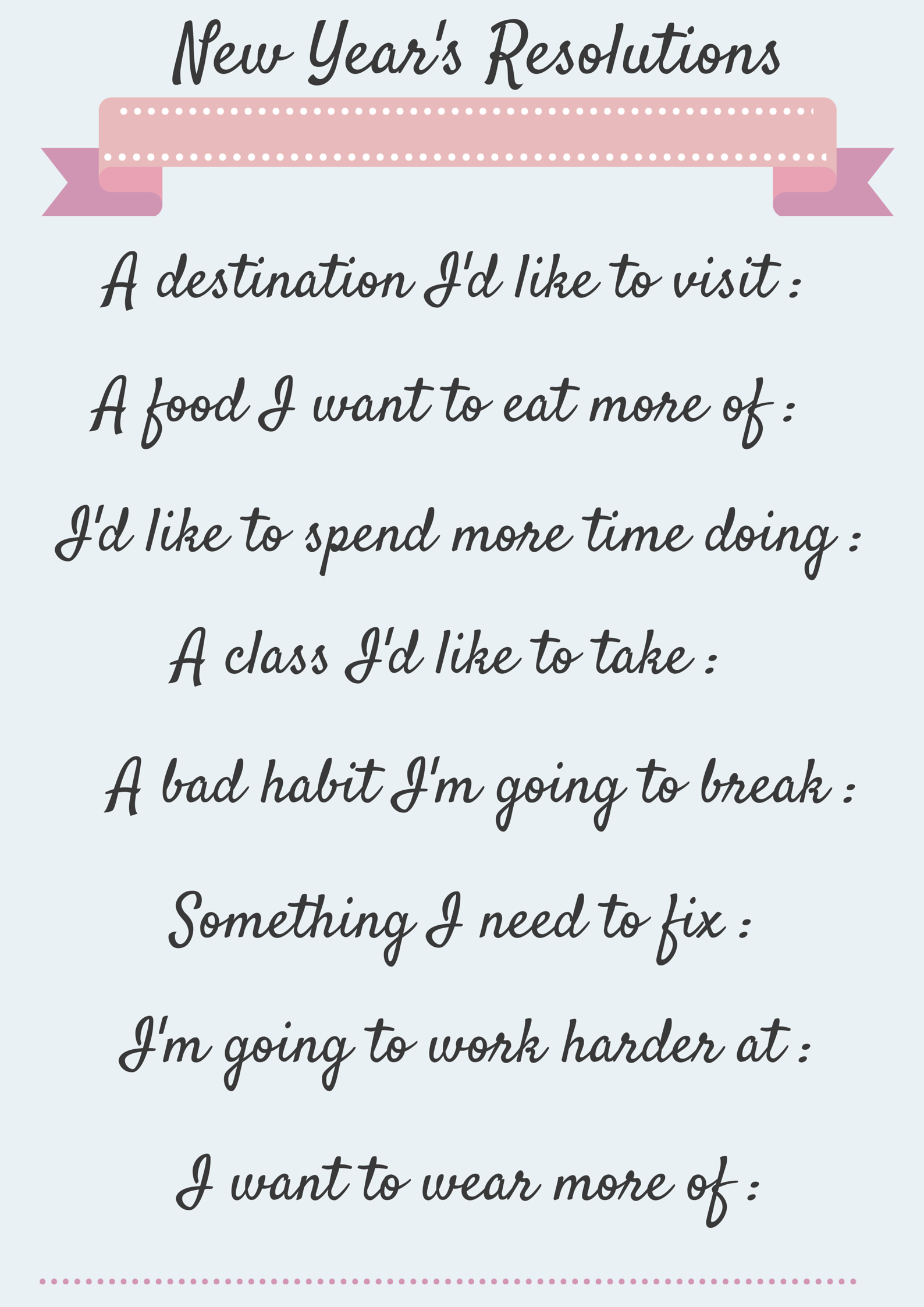
New Year Resolutions 2026


A Resolution is:

A resolve or determination: to make a firm resolution to do something. The act of resolving or determining upon an action or course of action, method, procedure, etc; and the mental state or quality of being resolved or resolute: firmness purpose.

The descriptions suggest three actions.

  • Naming what you are going to do or change,
  • Decide how you are going to make this change, and 
  • Developing a mental state of being determined to achieve this goal.

SOME EXAMPLES:
  • Look Where You Stand – Made lots of resolutions last Year’s Eve? Access how far you have stood by them? Now it is time to do!
  • Accomplish the Incomplete – If you still think that the last year, the resolutions you made and dumped it on the midway, now give it a second chance and make it done!
  • Soak up New Skills – Learning something interesting and new is always a value addition and fun too.
  • Unleash the Angel in You – Nothing is better than making smile on someone’s face, its feel awesome. Take a stand for peoples who need someone’s support. A little help also matters.
  • Contribute for a Cause – Giving support to the society, it is the slightest way to make the world a superior place to live in.
  • Get Struck by Cupid – Befall in love, is the world most beautiful thing to happen in your life. If you are charming enough that type, you may ring the wedding bell.
  • Go for a Blind Date – For the adventurous soul, a blind date can be fun. However take care to about the risk factors and get adequate precautions.
  • Remember the Important Dates – To makes your loved one feel special, always keep remembers the important date like, anniversaries, birthdays, first date etc.
  • Be Organized – It will make your life easy, maintain your daily life time and be stress-free. Make first a proper To-Do list.
  • Fun With Family – Spend more time with your family, they need your presences also to make it complete Family.
  • Waste Not, Want Not – If you have something but you don’t want it, food, extra medicine, etc — give it down to those who need it.Pep up your parents – Do something nice/good for your parents will make you guaranteed
  • Give up on a bad habit – older habits take time to pass away and its hard too – some really do like, biting your lips, biting nails, etc.
  • Endear a Diary – Letter writing is a boring art. But express your feelings are not. Transfer your heart feelings out in a diary.
  • Enrich your vocabulary – Communication is very important in any field of life, improve your vocabulary to master the art of success out.
LISTENING:

Thursday, 6 November 2025

Culture. US colonies. "No taxation without representation" Boston Tea Party

The Boston Tea Party was a political protest in Boston Harbor on December 16, 1773, where American colonists, disguised as Native Americans, dumped 342 chests of British tea into the water. It was a protest against the British Parliament's "taxation without representation," specifically the Tea Act of 1773, which gave the British East India Company a monopoly and still maintained a tax on tea. The event escalated tensions between Great Britain and the colonies, leading to the Coercive Acts (Intolerable Acts) and fueling the movement toward the American Revolution. 

Wednesday, 12 February 2025

St. Valentine's speaking

 St Valentine´s Day


READING ACTIVITY:

Valentine's Day is a traditional celebration of romantic love. It's celebrated on 14 February in many places. Here's how people celebrate it!

Cards

Sending a Valentine's card to someone you love is a custom that started more than a century ago. Couples give cards to each other, but you can also send an anonymous card to anyone you secretly love. Symbols on Valentine's cards include hearts, doves and the winged figure Cupid holding a bow and arrow.

Poems

Inside the cards, people normally write a message to show their feelings. One way to do this is by writing a poem in the card. Probably the most famous lines from a Valentine's Day poem are:

Roses are red, violets are blue,
Sugar is sweet, and so are you.

Gifts

As well as cards, 14 February is a day for giving gifts. Popular gifts include red roses, a box of chocolates, a teddy bear and a photo frame. More expensive ones include a meal in a nice restaurant, perfume, jewellery or a session at a health club.

However, some people complain that Valentine's Day has become too commercial. Actually, anything that your partner likes can be a great gift, and it does not need to be expensive. It can even be free! Some people make a video out of all their photos, add some nice music and then send it to their loved one on the day. You can also make a playlist of songs that you both like, and share it with them. Perhaps even more meaningfully, you can simply spend time with your loved one on Valentine's Day and give them your time and attention.

Valentine's Day is also a popular day to either propose or get married. You'd never forget your wedding anniversary!

Not for everyone?

Not everyone likes Valentine's Day. It can be a difficult time for people who are single, lonely or missing somebody. Some people feel they show their love for their partner every day, so they don't need to buy things just because it's Valentine's Day. Other people, single or not, think Valentine's Day is boring and unoriginal.

Many people just take 14 February as a normal day or do something special to celebrate the love they have for their friends and family. There are even anti-Valentine's events for people who are not in a romantic mood! Having competitions to make the worst Valentine's Day card, inviting people to a 'broken-hearted disco' or organising fancy-dress dating events are just a few fun ideas.

Carnival is an annual festival celebrated in many different ways in many countries around the world. Some of the world's most famous carnivals are held in Rio de Janeiro, Brazil, New Orleans, USA, and Venice, Italy. Find out what happens in these and one other carnival you may not have heard of.

What's carnival all about?

Carnival is a festival that happens over a few days, usually just before Lent, in February or March. Because traditionally many people go on a fast during Lent, giving up meat, sugar or other foods and drink, carnival is an opportunity to enjoy these treats for the last time. It is a time to celebrate and party, with music and dancing in the streets. Some people believe that carnival is actually older than the Christian period of Lent, and that it started as the Roman festival of Saturnalia.

New Orleans

One of the most famous carnivals in the world is in New Orleans, USA. It is called Mardi Gras, which is French for 'Fat Tuesday', the day when people would traditionally eat up all the fat before starting the Lent fast. The celebration in New Orleans lasts around two weeks, with a parade every day. Groups of people, called 'krewes', dress up in special costumes and ride on decorated floats. They throw small gifts to the people watching, especially strings of beads. There are also many balls, especially masked balls. Mardi Gras is very popular with tourists, and it is estimated that well over a million people visit every year to join the celebrations.

Rio de Janeiro

The carnival in Rio de Janeiro, Brazil, is considered the biggest in the world, with around two million people celebrating on the streets each day. Rio Carnival is famous for its samba music and for the amazing costumes and floats. In 1984, the government decided to give the carnival a special stadium, called the Sambadrome, where people could buy tickets to go and see the parades. However, there are still plenty of street parties and parades happening all over the city.

The parades are a kind of competition and the samba 'schools', or groups, are judged on their costumes, dancing, floats and music. Some samba schools spend millions of dollars on their preparations, but it is estimated that carnival makes over $40 million from ticket sales and advertising.

Venice

Carnival in Venice is a much quieter celebration, but it is still very famous, mainly for the beautiful masks that people wear. Traditionally, the masks are made and decorated by hand, with gold, jewels and feathers. There is a competition for the most beautiful mask, and there are many masked balls and other celebrations.

In St Mark's Square, there is an open-air theatre where you can watch traditional plays, and there are also classical music concerts. Because the streets are very narrow, there are candlelit parades on boats through the canals of the city. Watching all the people dressed in masks and costumes wandering through the city makes you feel as if you have stepped back in time to the 18th century.

Binche

The carnival in Binche, Belgium, is not as famous as some of the others, but it may have the longest history. It dates back to the 14th century. Up to 1,000 men and boys, called 'Gilles', dress up in masks, costumes and wooden shoes. They also wear very tall feather hats, up to 90cm tall. The Gilles dance through the streets and throw oranges at the crowd. This can sometimes cause accidents and break windows, but it is supposed to be good luck if you are hit by an orange.

All over the world, carnival is a time to celebrate and have a good time with friends and family. Have a great carnival, if you're celebrating this year!


Questionnaire: https://forms.office.com/e/0bgsEjMFNU 

Wednesday, 8 January 2025

Happy New Year 2025

 HAPPY NEW YEAR 2025


A RESOLUTION is to resolve or determination to make a firm resolution to do something. 
The act of resolving or determining upon an action or course of action, method, procedure, etc; 
and the mental state or quality of being resolved or resolute: firmness purpose.

Wednesday, 18 December 2024

Xmas is coming. Funny English activities for Christmas

What do you know about Xmas?


What Do You Want for Christmas? | A Short Film from The Right Brothers on Vimeo.


Christmas Super Quiz Game: 
A quiz game for reviewing Christmas vocabulary.
Christmas Quiz Game        
Christmas Quiz Game (Nativity Story)

 Multiple Choice Questions


CHRISTMAS SONGS DOING AN EXCELLENT LISTENING PRACTISE??? HERE IT IS YOUR OPPORTUNITY WITH LYRICS TRAINING!!! GUESS AND HAVE FUN!!!


 BAAMBOOZLE???