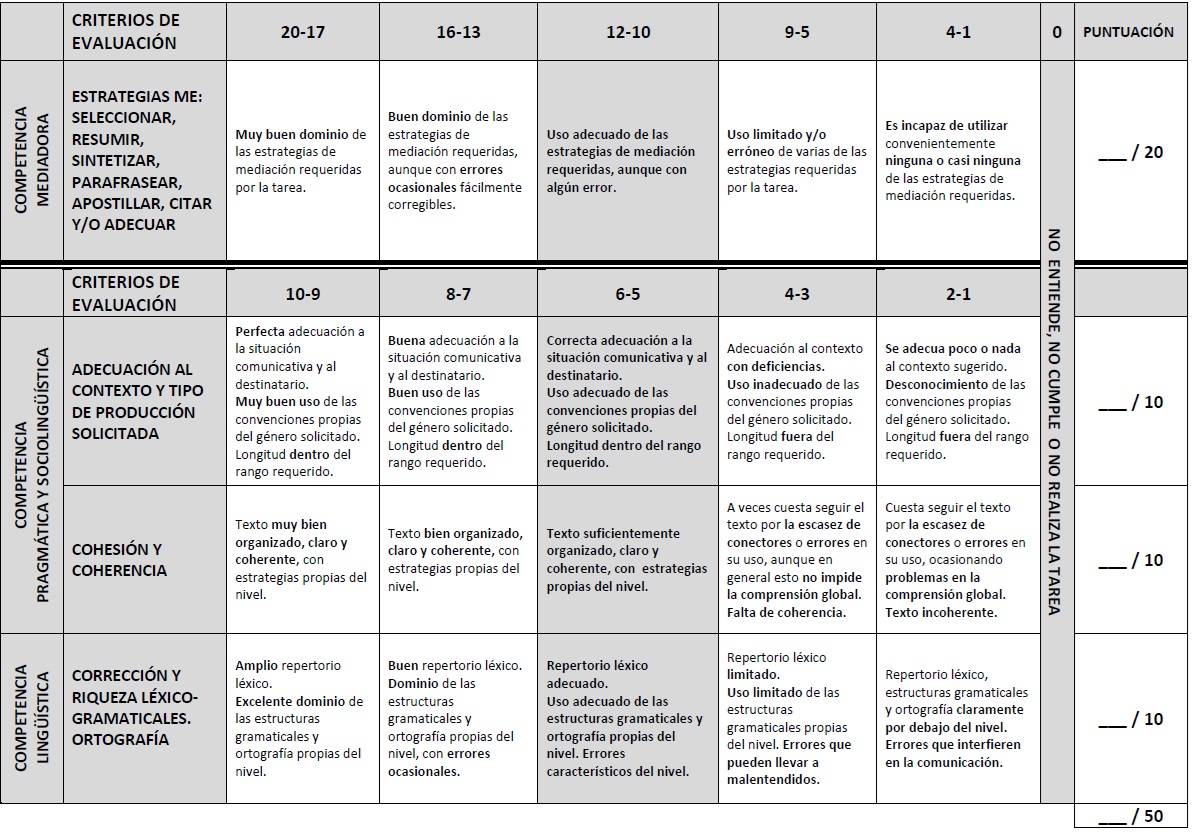
Tips - READ the instructions well: What's my role? To whom do I need to write? What about? Why? To what effect? How? What is the context?... - Identify and select the relevant information. - Use your own words, paraphrase (do not just copy from the text you are given), expand the information (explain, comment, clarify), connect ideas (compare and contrast, exemplify, relate to what you know), talk about the intentions, nuances and connotations of the text. - Take into account the audience you are writing to and the context and adapt the discourse appropriately: formal / informal.
TED, in case you haven’t heard, is an organization designed to spread ideas. The ideas take the format of short minute talks which are given during conferences held around the world. All the conferences have a focus, one guiding idea that ties all the talks together. The TED format of presenting is different from any other style of presenting in that the focus is on making a connection with your audience. A strong TED style speech bring the audience in and helps them to relate to the speaker and topic in a way unlike any other. Here you can find some examples before creating yours:
Visit www.ted.com (or search TED Talks on Youtube).
Decide on the topic and fill the template to help you organise the speech to be delivered in front of the class. This should be no longer than 3 minutes and visual aid will be limited as it is NOT meant to be a presentation with slides but a specch on the selected topic. Try to use all the hints provided, such as humour, inspiration, shocking facts, etc.
Sleep has become a big deal in working life. Sleeping is no longer seen as a sign of weakness among competitive colleagues. Apple introduced a Night Shift feature on its devices earlier this year, as consumers recognised that stimuli such as your screen’s backlight can affect your sleep quality.
Research shows that more sleep can lead to us earning more money. A US study has found that in areas where the sun sets earlier, people sleep for longer – and this translates into higher earnings. In the long term, just one extra hour of sleep a week increases wages by 4.9%. So if you live in an area that gets darker earlier, you should be richer. But don’t move house just yet – the higher wages correspond almost exactly with inflated house prices. As Jeffrey Shrader, one of the authors of the study, puts it: “If you want to sleep more, there are better ways to do it than moving house – just buy better curtains.”
This goes against conventional economics. Each extra hour of sleep should be taken away from working time. So how can sleeping earn you money? The answer is productivity. “The biggest effects come through employees who work on commission,” says Shrader. “If you go to work well rested, you are livelier and happier, and can sell more to increase your earnings.”
Even small amounts of sleep deprivation can have large effects. Another study found that sleeping six hours a night for two weeks produced the same results in cognitive tests as being totally sleep-deprived for up to two days straight. But a mid-afternoon nap can help. “Naps are great,” says sleep psychologist Dr Hans Van Dongen. If you struggle to get eight hours of sleep a night, a siesta can have a “reset” effect, and your productivity improves afterwards. “Roughly speaking, an hour’s nap can make up for an hour in lost sleep at night.”
So, the introduction of nap pods at Google’s headquarters does have some science behind it. Although once you start sleeping at work, what is the point in going home at all? Even short naps of up to half an hour can partially offset the productivity lost from chronic sleep deprivation. You snooze, you win.
But the most important workplace revolution would be much more flexible hours. Most of us fall into two broad “chronotype” categories: morning and evening types. Rigidly early start times at work are fine for larks, but a third of us are night owls, who are likely to earn up to 5% less as a result of being tired at work.
Lack of sleep has already been shown to be worse for productivity than being overweight or underweight. So, why are you still reading this? You should go back to bed.
Question 1: [2,5 POINTS] Indicate whether the following statements are true or false and write down which part of the text justifies your answer.
a) The best way to get more sleep is to move to a new home.
b) Sleeping more makes employees produce more.
c) The less you sleep at night, the longer you need to sleep during the day to get the same effect.
d) Google is about to introduce places in their offices for the workers to have a nap.
e) You may earn less if you are a nocturnal person.
Question 2: [1,5 POINTS] Find words or phrases in the text that correspond to the words and definitions given.
a) characteristic (par.1)
b) salary (par.2)
c) to remove (par.3)
d) to make better (par.4)
e) to recompense (par.5)
Question 3: [2 POINTS] Choose the most suitable answer (a, b or c) according to the text
1. You sleeping quality…
a) affects your colleagues at work.
b) is said to be related to being overweighted..
c) is affected by how you use technology at night.
Your friend Mary wants to visit a popular destination next holiday. Then, write a short text (75-125w) explaining the problems s/he may find and pointing out suggestions or alternatives.
Linguistic mediation is a type of interaction that takes place among people that are unable to communicate, when speakers do not speak the same language, or when speakers do speak the same language, but one of them has wider or more specific knowledge of the common language. According to this differentiation, mediation tasks can be bilingual (cross-linguistic or interlinguistic mediation) or monolingual (intralinguistic mediation).
The Common European Framework of Reference (CEFR) states that linguistic mediation activities take up an important place in our societies, and describes mediation activities as either oral or written, specifying different tasks that can be developed as mediation practice, such as translation, interpretation, paraphrasing, summarizing and note-taking (CEFR 2002: 14-15).
You have been mediating all your life, at home with your parents, when you go out with your friends and also at the school when you are told to do those exercises in which you have to read something and tell your partners what you have read in your own words (written / oral)
Tasks:
You think your brother is spending too long in front of his computer screen. Read the infogragh below and try to convince him that he should get out more. (2 minutes)
Your teacher has very strong ideas against video games. Study the infogragh below and try to convince him that they can be beneficial. (2 minutes)
You are having lunch with some friends. Some of them think that the environmental issues have been greatly exaggerated. Use the text below to support your opinion. (2 minutes)
Linguistic mediation is a type of interaction that takes place among people that are unable to communicate, when speakers do not speak the same language, or when speakers do speak the same language, but one of them has wider or more specific knowledge of the common language. According to this differentiation, mediation tasks can be bilingual (cross-linguistic orinterlinguistic mediation)or monolingual (intralinguistic mediation) , which is the one that will be applied in the Valencian Community Certificate exams.
The Common European Framework of Reference (CEFR) states that linguistic mediation activities take up an important place in our societies, and describes mediation activities as either oral or written, specifying different tasks that can be developed as mediation practice, such as translation, interpretation, paraphrasing, summarizing and note-taking (CEFR 2002: 14-15).
You have been mediating all your life, at home with your parents and your children, when you go out with your friends and also at the school when:
you are told to do those exercises in which you have to read something and tell your partners what you have read in your own words (written / oral)
you interview a new partner to get to know him/ her and then you have to introduce him /her to the rest of the class (oral / oral)
book or film reviews are wanted, etc.. etc…
Maybe the only difference between what you did in the past and what you have to do now is that it will be assessed separately and not as an integrated skill (oral / written)
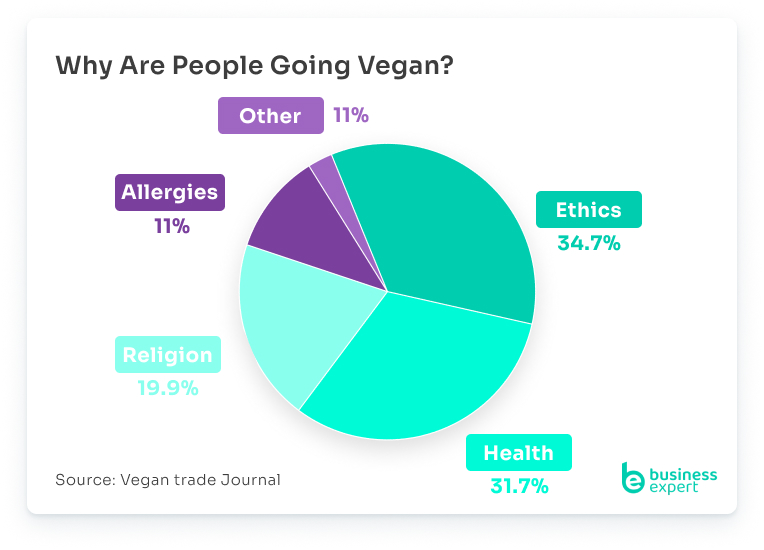
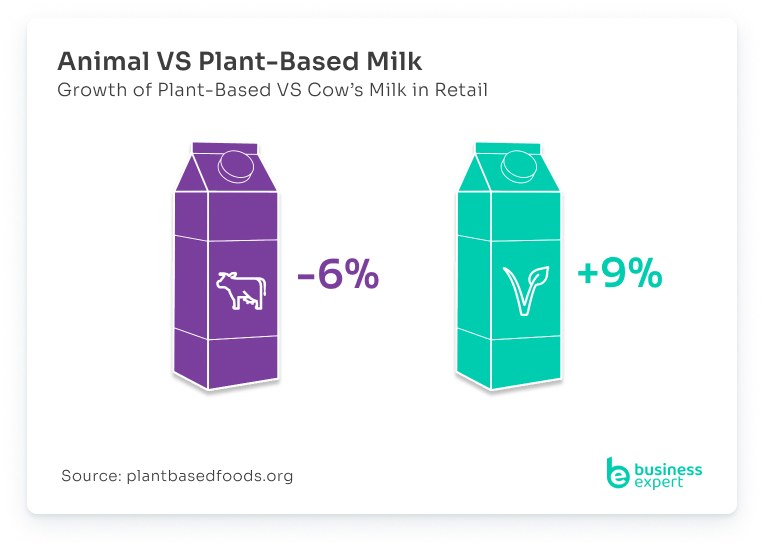
Mar 22, 2018. It's the 'environmentally friendly' diet that's taking the world by storm. Veganism is quickly becoming more mainstream. And the UK, in particular, has seen huge growth in the vegan food sector - companies are scrambling to sink their teeth into the market. But is 2018 really the year of veganism, or is it all just a fad? Katie Gregory takes a look.
Remember these tips to carry out the task of mediation:
You are given a text in English, that you have to mediate into English as well –>Read the task carefully, and, depending on what you are asked to do, use the appropriate mediation strategies:
summarise: describe the main ideas of a text for your friend.
select some of the most relevant points of the text: decide what is important for your friend (think of the context described in the task), and talk about that.
In all cases: REPHRASE: use different words than those in the text (use synonyms, explain, adapt the language…)- the objective is for your friend to understand the text you are writing. [He/She won’t see the original text, only yours].
Typically, you will be asked to write an email or a note to a friend.
Don’t beat about the bush—> go to the point: mediate the information in the text, and do not add any extra information which is not there.
You are being tested on your MEDIATION skills (how clear you are when explaining ideas, how organised, how helpful to other people…): do not obsess about showing off how good your English is (you will have to do that in the writing tasks). If you can use beautiful English while being clear and organised, that is great, but there are no extra points in the mediation tasks for showing a wide range of language.
These are some resources to help you write your mediated text:
This is a possible mediated text for you to see what you are expected to do (this is not THE only correct option: any clear, organised, helpful text will be OK):
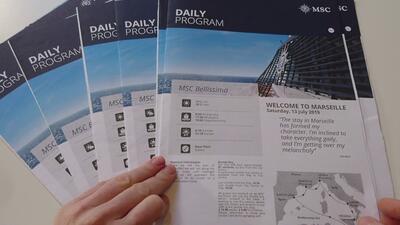
You are travelling with your family on a cruise around the Mediterranean sea. Have a look at the daily program provided by your ship company and write a short description of the things to do on board with the daily planner or the excursions/places you all can visit. Your writing sholud be no longer than 150 words and the task includes referring things to do regarding sports, food, games, dancing, entertainment and sightseeing, considering the schedule and content given. Everything organised into paragraphs.
If you're craving crystalline waters, remarkable scenery, impressive architecture, and mouthwatering dishes, then the Mediterranean is calling your name.
The Daily Program is the best tool to guide you through all the fun stuff to do on your cruise vacation. There are tons of details about every aspect of your cruise vacation - from the moment you board to when you leave, and everything in between. Ports of call, countless activities, family programming, dining, bars, lounges, music, and shows are just some of the things listed in the daily onboard publication.
Activity 2
You have just found out that your friend is going to the Cella Big Beat Festival in a group of 6. Cella is your home town and your parents still live there. There is a pub in the village with good food at low prices.
Look at the following infographic/poster and send your friend a voice message (1 minute – 1 min 30 secs) OR a written message (about 200-220 words) giving advice on the following:
Accommodation.
Food (expensive at the festival).
Entering and leaving the festival.
Clothes and bedding recommendations. Why?
Offer your parents’ telephone number in case of problems.
Best day
REMEMBER: It is IMPORTANT to USE YOUR OWN WORDS as much as possible.
Respuesta “modelo” para la mediación escrita. El nivel es entre B1 y B2. Los comentarios te ayudarán a entender por qué es un buen ejemplo de mediación.
(Si no lo ves bien usa las teclas “Ctrl” y “+ ” simultáneamente para agrandar la página)
El audio siguiente es una respuesta “modelo” para la mediación oral. El nivel es entre B1 y B2. El texto es muy parecido al de la mediación escrita con algún cambio.
Linguistic mediation is a type of interaction that takes place among people that are unable to communicate, when speakers do not speak the same language, or when speakers do speak the same language, but one of them has wider or more specific knowledge of the common language. According to this differentiation, mediation tasks can be bilingual (cross-linguistic orinterlinguistic mediation)or monolingual (intralinguistic mediation) , which is the one that will be applied in the Valencian Community Certificate exams.
The Common European Framework of Reference (CEFR) states that linguistic mediation activities take up an important place in our societies, and describes mediation activities as either oral or written, specifying different tasks that can be developed as mediation practice, such as translation, interpretation, paraphrasing, summarizing and note-taking (CEFR 2002: 14-15).
You have been mediating all your life, at home with your parents and your children, when you go out with your friends and also at the school when:
you are told to do those exercises in which you have to read something and tell your partners what you have read in your own words (written / oral)
you interview a new partner to get to know him/ her and then you have to introduce him /her to the rest of the class (oral / oral)
book or film reviews are wanted, etc.. etc…
Maybe the only difference between what you did in the past and what you have to do now is that it will be assessed separately and not as an integrated skill (oral / written)
EXAMPLE 1
TOP ENTERTAINMENT
A friend of yours needs your help for a class project they are preparing about TOP ENTERTAINMENT choice among people at different ages. Look at the following information about it and write a summary of the most important facts for your friend (70 to 90 words).Remember your text needs to be about the information below,not about your personal opinion.
EXAMPLE 2
The World Meteorological Association has issued this graph to show how global temperature has been consistently rising for the last century. Write a short summary (70-90 words) to explain the data in the graphic.
EXAMPLE 3
AIRBNB versus HOTELS
A friend of yours needs your help for a class project they are preparing about the price per night between Airbnb and Hotel rooms in different cities all over the world. Look at the following information about it and write a summary of the most important facts for your friend (70 to 90 words). Remember your text needs to be about the information below, not about your personal opinion.
EXAMPLE 4
BESTSELLERS BY GENRE
A friend of yours needs your help for a class project they are preparing about best-selling genres. Look at the following information about it and write a summary of the most important facts for your friend (70 to 90 words).Remember your text needs to be about the information below,not about your personal opinion.





 Remember these
 You are given a text in English
 , that you have to mediate into English as well
 These are some resources to help you write your mediated text:
 Once you have written your task, why don’t you