ONLINE OR IN REAL LIFE.
Showing posts with label speaking. Show all posts
Showing posts with label speaking. Show all posts
Monday, 9 November 2026

American politics. Midterm elections guide.

https://www.bbc.com/news/articles/c6wyz223j19po
The midterm elections were under way in the US, as voters took part in a ballot that could have a major impact on the rest of Donald Trump's presidency.
Monday, 11 May 2026
Tuesday, 7 April 2026
TED talks. Oral and written mediation
TED TALKS. PREPARED FOR YOUR OWN STORY-TELLING
TED, in case you haven’t heard, is an organization designed to spread ideas. The ideas take the format of short minute talks which are given during conferences held around the world. All the conferences have a focus, one guiding idea that ties all the talks together. The TED format of presenting is different from any other style of presenting in that the focus is on making a connection with your audience. A strong TED style speech bring the audience in and helps them to relate to the speaker and topic in a way unlike any other. Here you can find some examples before creating yours:
Visit www.ted.com (or search TED Talks on Youtube).
Decide on the topic and fill the template to help you organise the speech to be delivered in front of the class. This should be no longer than 3 minutes and visual aid will be limited as it is NOT meant to be a presentation with slides but a specch on the selected topic. Try to use all the hints provided, such as humour, inspiration, shocking facts, etc.
https://www.youtube.com/channel/UCskU_g7t6b5ecsA1CTS3y9Q


Sleep has become a big deal in working life. Sleeping is no longer seen as a sign of weakness among competitive colleagues. Apple introduced a Night Shift feature on its devices earlier this year, as consumers recognised that stimuli such as your screen’s backlight can affect your sleep quality.
Research shows that more sleep can lead to us earning more money. A US study has found that in areas where the sun sets earlier, people sleep for longer – and this translates into higher earnings. In the long term, just one extra hour of sleep a week increases wages by 4.9%. So if you live in an area that gets darker earlier, you should be richer. But don’t move house just yet – the higher wages correspond almost exactly with inflated house prices. As Jeffrey Shrader, one of the authors of the study, puts it: “If you want to sleep more, there are better ways to do it than moving house – just buy better curtains.”
This goes against conventional economics. Each extra hour of sleep should be taken away from working time. So how can sleeping earn you money? The answer is productivity. “The biggest effects come through employees who work on commission,” says Shrader. “If you go to work well rested, you are livelier and happier, and can sell more to increase your earnings.”
Even small amounts of sleep deprivation can have large effects. Another study found that sleeping six hours a night for two weeks produced the same results in cognitive tests as being totally sleep-deprived for up to two days straight. But a mid-afternoon nap can help. “Naps are great,” says sleep psychologist Dr Hans Van Dongen. If you struggle to get eight hours of sleep a night, a siesta can have a “reset” effect, and your productivity improves afterwards. “Roughly speaking, an hour’s nap can make up for an hour in lost sleep at night.”
So, the introduction of nap pods at Google’s headquarters does have some science behind it. Although once you start sleeping at work, what is the point in going home at all? Even short naps of up to half an hour can partially offset the productivity lost from chronic sleep deprivation. You snooze, you win.
But the most important workplace revolution would be much more flexible hours. Most of us fall into two broad “chronotype” categories: morning and evening types. Rigidly early start times at work are fine for larks, but a third of us are night owls, who are likely to earn up to 5% less as a result of being tired at work.
Lack of sleep has already been shown to be worse for productivity than being overweight or underweight. So, why are you still reading this? You should go back to bed.
Question 1: [2,5 POINTS] Indicate whether the following statements are true or false and write down which part of the text justifies your answer.
a) The best way to get more sleep is to move to a new home.
b) Sleeping more makes employees produce more.
c) The less you sleep at night, the longer you need to sleep during the day to get the same effect.
d) Google is about to introduce places in their offices for the workers to have a nap.
e) You may earn less if you are a nocturnal person.
Question 2: [1,5 POINTS] Find words or phrases in the text that correspond to the words and definitions given.
a) characteristic (par.1)
b) salary (par.2)
c) to remove (par.3)
d) to make better (par.4)
e) to recompense (par.5)
Question 3: [2 POINTS] Choose the most suitable answer (a, b or c) according to the text
1. You sleeping quality…
a) affects your colleagues at work.
b) is said to be related to being overweighted..
c) is affected by how you use technology at night.
2. Productivity is linked to….
a) mainly to your weight.
b) only to sleeping
c) both your sleep and your weight.
3. In places where it gets dark earlier….
a) people sleep more hours.
b) houses are cheaper.
c) you’d better use curtains.
4. Working shifts….
a) Are more tiring for workers.
b) are the change needed.
c) are only for nocturnal people.
Sunday, 8 February 2026
Reading, Wrting (formal/informal email) and speaking


- https://learnenglishteens.britishcouncil.org/skills/writing/b2-writing/informal-email
- https://learnenglishteens.britishcouncil.org/skills/writing/b2-writing/more-formal-email

https://edubenchmark.com/blog/place-ielts-cue-card-speaking-part-2/
Pau test practice:
Go
it alone: solo trip on the rise as travellers opt for “me time”
More Britons are choosing to travel on their own, using apps and social
media, as it means a holiday without compromises.
Solo travel is on the rise as a growing number of holidaymakers opt for
trips that allow them to “do what they want”. Around 15% of travellers took a
trip on their own in the last year, according to the Association of British
Travel Agents (Abta). The figure is up from 12% last year.
The age range that showed the biggest increase was that of 35-44 year
olds, with more than 16% taking a trip alone: the figure for 2017 was just 5%.
Having the opportunity to do whatever they wanted was the most common reason
given by three-quarters of people surveyed in all age groups, while taking time
out and meeting new people have become less important, according to the report.
The upward trend over the last decade is attributed to improved
technology and a growing number of apps (alongside social media) that enable
travellers to navigate the world with more ease and confidence alone: from
instant language translation, free global messaging and other roaming options,
to apps that connect people with other solo travellers or local hosts for
dinner, tours or a bed for the night.
Travel companies have responded to demand by offering a range of options
for people booking by themselves. Tour operators, such as Intrepid Travel, have
doubled its offering of independent trips this year and say “solos” now
represent 50% of its customers. Its small group tours for solo travellers aim
to offer a “ready-made group of friends”
Abta reported that, overall, the number of British people taking a
holiday remained high, with 86% of respondents taking a holiday at home or
abroad in the 12 months to August 2018. Package holidays remain a popular
choice for holidays abroad and city breaks were still the most popular type of
trip: 48% of those surveyed having taken one this year, closely followed by
beach holidays (40%).
Despite the positive figures from Abta, the British tourist authority chairman Steve Ridgway’s response had a note of caution, in light of Brexit: “We face a number of significant challenges, the most important, the UK’s departure from the European Union. We want to ensure that the future relationship keeps our borders as frictionless as possible for visitors, our aviation as connected as ever and our economic stability on track, because tourism depends on this.”
Adapted from The
Guardian 9th October 2018
Question
1: [2 P] Indicate whether the following statements are true or false and write
down which part of the text justifies your answer.
a) More and more travellers want to feel free when
choosing their holiday activities.
b) Agents have had no reaction to solo travelling.
c) British people no longer choose holidays which include
everything they need to travel.
d) Future political changes may affect the tourist
industry.
Question
2 [2 P] Answer the following questions in your own words.
a) Why are more and more people taking a holiday on their
own?
b) How does technology help solo travellers?
Question
3: [1,5 P] Find words or phrases in the text that correspond to the words
and definitions given.
to choose (par.2)
chance (par.3)
ascending (par.4)
variety (par.5)
to confront (par.7)
Question
4: [1,5 P] Choose and write the most suitable answer (a, b, c or d)
according to the text and write the sentence onto your worksheet
1. The British tourist authority is cautious...
a) although the positive figures from Abta.
b) however, Abta gave
positive figures.
c) even though Abta gave positive figures.
d) due to the positive
figures from Abta.
2.
Solo travellers would not feel so confident...
a) unless they have apps to help them.
b) if they used apps to
help them.
c) whether they used apps to help them.
d) if they did not have
apps to help them.
3.
Social media and apps help solo travellers...
a) to contact their local agent.
b) talk to their group
partners.
c) help them with the language barrier in foreign countries.
d) book a table at a restaurant.
KEY
Question 1: [2 POINTS] Indicate whether the
following statements are true or false and write down which part of the text
justifies your answer.
a) TRUE “Solo travel is on the rise as a growing number of holidaymakers
opt for trips that allow them to “do what they want” OR “Having the opportunity
to do whatever they wanted was the most common reason given”
b) FALSE “Travel companies have responded to demand by offering a range of
options for people booking by themselves”
c) FALSE “Package holidays remain a popular choice for holidays abroad”
d) TRUE “Despite the positive figures from Abta, the British tourist
authority chairman Steve Ridgway’s response had a note of caution, in light of
Brexit”
Question 2 [2 POINTS] Answer the following
questions in your own words.
a) There is a growing number of people travelling alone since this way of
travelling offers them the freedom to choose what they can do; whereas before
they wanted to have time for themselves or just meet new friends.
b) Technology helps solo travellers as they feel they can rely on it if
they have problems with the language and can communicate easily with other
people travelling on their own; what’s more, they can even contact locals, who
they can meet for dinner or for accommodation.
Question 3: [1,5 POINTS] Find words or phrases in
the text that correspond to the words and definitions given.
a) to opt for
b) opportunity
c) upward
d) range
e) to face
Question 4: [1,5 POINTS] Choose the most suitable answer (a, b or c) according to the text.
1. c) ...even though Abta gave positive figures.
2. d) if they did not have apps to help them.
3. c) help them with the language barrier in foreign
countries.
Wednesday, 14 January 2026
Tuesday, 6 January 2026
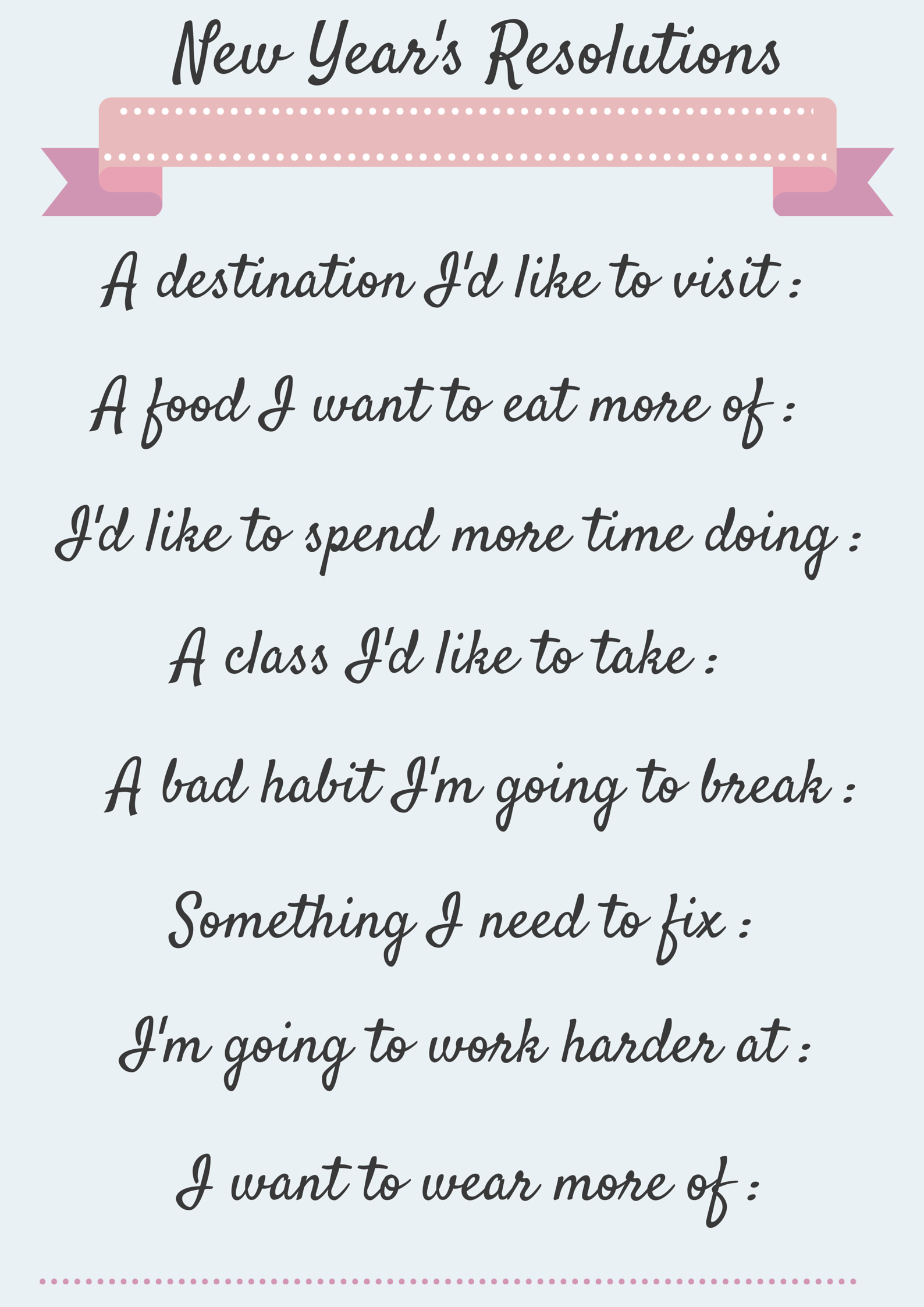
New Year Resolutions 2026

A Resolution is:
A resolve or determination: to make a firm resolution to do something. The act of resolving or determining upon an action or course of action, method, procedure, etc; and the mental state or quality of being resolved or resolute: firmness purpose.
The descriptions suggest three actions.
- Naming what you are going to do or change,
- Decide how you are going to make this change, and
- Developing a mental state of being determined to achieve this goal.
SOME EXAMPLES:
- Look Where You Stand – Made lots of resolutions last Year’s Eve? Access how far you have stood by them? Now it is time to do!
- Accomplish the Incomplete – If you still think that the last year, the resolutions you made and dumped it on the midway, now give it a second chance and make it done!
- Soak up New Skills – Learning something interesting and new is always a value addition and fun too.
- Unleash the Angel in You – Nothing is better than making smile on someone’s face, its feel awesome. Take a stand for peoples who need someone’s support. A little help also matters.
- Contribute for a Cause – Giving support to the society, it is the slightest way to make the world a superior place to live in.
- Get Struck by Cupid – Befall in love, is the world most beautiful thing to happen in your life. If you are charming enough that type, you may ring the wedding bell.
- Go for a Blind Date – For the adventurous soul, a blind date can be fun. However take care to about the risk factors and get adequate precautions.
- Remember the Important Dates – To makes your loved one feel special, always keep remembers the important date like, anniversaries, birthdays, first date etc.
- Be Organized – It will make your life easy, maintain your daily life time and be stress-free. Make first a proper To-Do list.
- Fun With Family – Spend more time with your family, they need your presences also to make it complete Family.
- Waste Not, Want Not – If you have something but you don’t want it, food, extra medicine, etc — give it down to those who need it.Pep up your parents – Do something nice/good for your parents will make you guaranteed
- Give up on a bad habit – older habits take time to pass away and its hard too – some really do like, biting your lips, biting nails, etc.
- Endear a Diary – Letter writing is a boring art. But express your feelings are not. Transfer your heart feelings out in a diary.
- Enrich your vocabulary – Communication is very important in any field of life, improve your vocabulary to master the art of success out.
LISTENING:
Monday, 10 November 2025
Mediation- Oral skills.
MEDIATION
Linguistic mediation is a type of interaction that takes place among people that are unable to communicate, when speakers do not speak the same language, or when speakers do speak the same language, but one of them has wider or more specific knowledge of the common language. According to this differentiation, mediation tasks can be bilingual (cross-linguistic or interlinguistic mediation) or monolingual (intralinguistic mediation).
The Common European Framework of Reference (CEFR) states that linguistic mediation activities take up an important place in our societies, and describes mediation activities as either oral or written, specifying different tasks that can be developed as mediation practice, such as translation, interpretation, paraphrasing, summarizing and note-taking (CEFR 2002: 14-15).
You have been mediating all your life, at home with your parents, when you go out with your friends and also at the school when you are told to do those exercises in which you have to read something and tell your partners what you have read in your own words (written / oral)
Tasks:
You think your brother is spending too long in front of his computer screen. Read the infogragh below and try to convince him that he should get out more. (2 minutes)

Your teacher has very strong ideas against video games. Study the infogragh below and try to convince him that they can be beneficial. (2 minutes)

You are having lunch with some friends. Some of them think that the environmental issues have been greatly exaggerated. Use the text below to support your opinion. (2 minutes)

Monday, 3 November 2025
Speaking and discussion. Gen Z protests
Young people across the globe are taking to the streets in protest against their governments. From Madagascar, to Peru, to Indonesia, Generation Z is rising to express their growing discontent with their leaders. Gen Z consists of people born roughly between 1996 and 2010. They share a common perception of a world of increasing inequality, corruption, nepotism, corporate greed, and a bleak outlook regarding career prospects. This week in Madagascar, a group of protesters dubbed "Gen Z Madagascar" helped oust the country's president. Young Indonesians took part in deadly demonstrations over lawmakers' pay. In Morocco, people marched to call for better healthcare and education.
The protesters have two things in common. One is a growing exasperation about the state of the world; the other is the use of a flag from a Japanese manga called "One Piece". The flag depicts a skull with a straw hat and crossed bones. In the manga, a group of pirates fly the flag and fight against oppressive governments and injustice. In real life, the flag has appeared on banners and social media, and seen in graffiti worldwide. Al Jazeera reported that in protests in Nepal, the flag was painted on murals, hung from vehicles, and was displayed in place of national flags. It added: "It is used partly in satire, partly as a statement: rejecting the status quo, calling out what protesters see as failures of governance."


Stating an opinion
- In my opinion...
- The way I see it...
- If you want my honest opinion....
- According to Lisa...
- As far as I'm concerned...
- If you ask me...
Asking for an opinion
- What's your idea?
- What are your thoughts on all of this?
- How do you feel about that?
- Do you have anything to say about this?
- What do you think?
- Do you agree?
- Wouldn't you say?
Expressing agreement
- I agree with you 100 percent.
- I couldn't agree with you more.
- That's so true.
- That's for sure.
- (slang) Tell me about it!
- You're absolutely right.
- Absolutely.
- That's exactly how I feel.
- Exactly.
- I'm afraid I agree with James.
- I have to side with Dad on this one.
- No doubt about it.
- (agree with negative statement) Me neither.
- (weak) I suppose so./I guess so.
- You have a point there.
- I was just going to say that.
Expressing disagreement
- I don't think so.
- (strong) No way.
- I'm afraid I disagree.
- (strong) I totally disagree.
- I beg to differ.
- (strong) I'd say the exact opposite.
- Not necessarily.
- That's not always true.
- That's not always the case.
- No, I'm not so sure about that.
Interruptions
- Can I add something here?
- Is it okay if I jump in for a second?
- If I might add something...
- Can I throw my two cents in?
- Sorry to interrupt, but...
- (after accidentally interrupting someone) Sorry, go ahead. OR Sorry, you were saying...
- (after being interrupted) You didn't let me finish.
Settling an argument
- Let's just move on, shall we?
- Let's drop it.
- I think we're going to have to agree to disagree.
- (sarcastic) Whatever you say./If you say so.
Wednesday, 24 September 2025
Speaking. Discussion. CHANGES IN OUR LIVES
Introducing the Topic
- Pros and Cons: "The main advantage of X is..." or "An important disadvantage is...".
- Benefits and Drawbacks: "There are many benefits to this approach, but also several drawbacks".
- Positives and Negatives: "Let's consider the positive and negative aspects of this decision".
- Strengths and Weaknesses: "We should examine the strengths and weaknesses before moving forward".
Presenting Opposing Views
- "On the one hand..." / "On the other hand...": This classic structure clearly separates two sides of an argument.
- "In contrast...": Use this to show how one idea differs from another.
- "However..." / "Nevertheless...": Use these conjunctions to introduce a contrasting point.
Expressing Your Opinion
- "In my opinion..." / "I believe...": A straightforward way to state your personal view.
- "From my point of view...": Offers a different perspective.
- "I would argue that...": Presents a stronger, more assertive stance.
Expressing Agreement or Disagreement
- To Agree: "I agree with you," or "That's a good point".
- To Disagree Politely: "I see your point, but...", "I understand what you're saying, however...", or "I have a slightly different perspective".
- To Acknowledge a Counterpoint: "That's true," or "You're right about that".
Concluding the Discussion
- Summarize: "To sum up, the main points are...".
- Compromise: "Let's try to find a middle ground".
- Agree to Disagree: "We can't seem to agree, so perhaps we should agree to disagree".
 |


- CHANGING APPEARANCE WILL MAKE YOU HAPPIER
- YOUNG PEOPLE COPE WITH CHANGES BETTER/EASIER
- DIFFICULTIES IN CHANGING LIFESTYLE
- KEEPING THE SAME CIRCLE OF FRIENDS
- SEEKING NEW EXPERIENCES AND TRYING NEW THINGS.
Subscribe to:
Posts (Atom)