Showing posts with label writing. Show all posts

Friday, 8 May 2026

PAU 26. Writing typology

Written production. Choose ONE of the two options below and write a short composition (120-150 words). Compositions up to 200 words won’t be penalized. Remember that compositions MUST NOT be signed. 

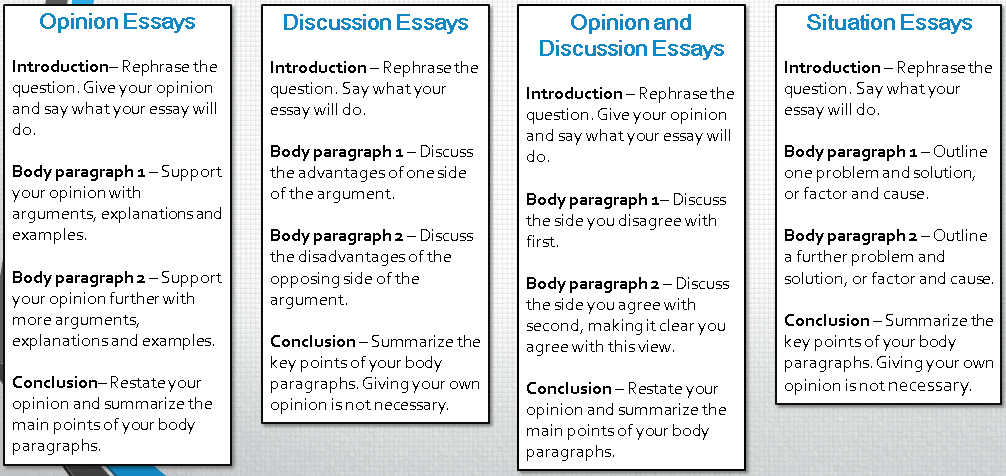
  1. OPINION ESSAY: Write an opinion essay on the following topic: Do you think social media is more helpful or harmful for teenagers? Give reasons to justify your opinion. (JUL25)
  2. DISCOURSIVE ESSAY (FOR/AGAINST-AD/DISADVANTAGES); Write a for and against essay on the following topic: What are the advantages and disadvantages of allowing students to use mobile phones in schools? (JUN25)
  3. NARRATIVE: Write a story about something that happened to you in the past. Your story must begin with this sentence: It all started with a phone call late at night. (JUL25)
         CORRESPONDENCE LETTER (FORMAL/INFORMAL)
  1. COMPLAINT LETTER: You recently took a self-catering holiday in a luxury apartment, but the standard of the accommodation was very poor. The holiday company that you booked with have offered you some vouchers as compensation, but you have decided you would prefer a cash refund instead. Write a letter to the company outlining the problems you experienced with the accommodation and the action you want them to take.
  2. APPLICATION LETTER: A tourist company which organises coach tours of your home town has placed the following advertisement in your local newspaper: TOUR GUIDES REQUIRED: Are you an outgoing and sociable person, who has a good command of English and some knowledge of local history? Take-a-Tour is setting up a branch in your area and we are looking for tour guides to accompany up to fifty passengers a time on our coach tours. Your duties will include welcoming passengers aboard the coach, giving a commentary about the local sights, and taking small groups around the town on foot.

Monday, 4 May 2026

Essay writing. PAU Practice


STRUCTURE:
INTRO
It is generally believed that_________________________________________.I really feel it is ___________________________________________ although some think ________________________________________. It seems clear that _________________________.

BODY
There are several reasons why I think________________________________ is better. First of all, you ____________________________________. Most of people think ______________________________.
Secondly, ____________________________ gives you the opportunity to ________________________.
I´m absolutely convinced that __________________________________. Finally, and perhaps most importantly, ____________________ makes you learn__________________________ which is another positive/negative aspect.

CONCLUSION
It seems to me that ________________________ is far better. There are lots of reasons to
__________________. To sum up, from my point of view, _______________________________. Maybe in the future,____________________________

 ADVANTAGES-DISADVANTAGES

1-INTRO:
1.1 For the great majority of people ______________________________________________________. 
A problem that is often debated nowadays ________________________________________________. 
Who cares about ____________________________________________________________________? 
1.2 It is a well-known fact that _______________________________________________________. 
Besides, recent studies show there are ______________________________________________. 
1.3There are reasons to believe that ______________________________________________. 
Therefore, ___________________________________________________________________.

2-DEVELOPMENT:
2.1 A lot of people claim that __________________________________________________   
2.2 What is more, ____________________________________________________________
For example, ________________________________________________________________. 
2.3-While/Although______________________________ it cannot be denied that_____________
Another point worth considering has to do with ____________________________________

3-REFUTING:
3.1 In contrast to this idea, ____________________________________________________________, so it is not easy to ___________________________________________. Whereas, in comparison, ___________________________________________. 
3.2However, we should also consider___________________________________. On the other hand, __________________
2.3 Therefore, it is reasonable to think that _______________________________________.

4-CONCLUSION:
4.1 This bring us the question whether ___________________________________________________, it is highly probable __________________________________________________. 
4.2 In my opinion, _________________________________________________________ From my point of view, ______________________________________. Maybe in the future _____________________


ractice makes perfect. Try these activities and then write your own composition. Rememeber the structure, linking words, vocabulary, etc...

https://wordwall.net/es/resource/28871847/opinion-essay-connectors

https://wordwall.net/es/resource/52733708/opinion-essay-vocabulary

Structure of the Opinion Essay:

  • Introduction – introduces the topic and state your opinion clearly
  • Body - consists of three or more paragraphs each presenting a separate viewpoint supported by reasons/examples
  • Conclusion – summarizes/restates your opinion using different words

Useful Language
То express opinion: I believe, In my opinion, I think, In my view, I strongly believe, I see it, It seems to me (that), As far as I am concerned, I am (not) convinced that..., In my opinion/view …My opinion is that …, I (firmly) believe …, I (definitely) feel/think that, I am inclined to believe that ……
То list points: In the first place, first of all, to start with, Firstly, to begin with
То add more points: what is more, another major reason, also, furthermore, moreover, in addition to this/that, besides, apart from this, not to mention the fact that
То introduce contrasting viewpoints: It is argued that, People argue that, There are people who oppose, Contrary to what most people believe,
As opposed to the above ideas
To introduce examples: for example, for instance, such as, in particular, especially
To conclude: To sum up, All in all, All things considered, Taking everything into account.

Paragraph outline: Examples:


Physical Education should be taught in schools. 
Do you agree or disagree? Support your opinion with arguments and examples.

It´s widely known that Physical Education has been a part of the school curriculum for years. It is clear the benefits of the sports practice for teenagers is undeniable. There are many reasons that support the fact that it should remain so for a variety of reasons.

In the first place, offering Physical Education is vital for children who have neither the time, nor the opportunity to do sport elsewhere. Also, Physical Education is especially beneficial for children living in crowded cities who do not have space to play. Doing sport at school gives them the opportunity to exercise and get rid of their excess energy. In addition, team sports develop children’s social skills encouraging them to work as part of a team and to cooperate with others.

On the other hand, some parents feel that Physical Education should not be a compulsory subject as not all children enjoy or are good at sport. These parents forget, however, that all children can benefit from physical activities and doing sport will give them the chance to improve their skills and their health.

In conclusion, I believe that Physical Education is an important part of every school curriculum since physical activity helps children to keep fit and stay energetic and alert.

An essay


https://en.ppt-online.org/284818


Useful expressions and linking words/phrases
• To list points:
Firstly, First of all, In the first place, To begin/start with, Secondly, Thirdly, Finally
• To list advantages:
One/Another/A further/An additional (major) advantage of… is … The main/greatest/first advantage of… is …
• To list disadvantages:
One/Another/ A further/An additional (major) disadvantage/drawback of. The main/greatest/most serious/first disadvantage /drawback of… Another negative aspect of…
• To introduce points/arguments for or against:
One (very convincing) point/argument in favour of… / against, 
A further common criticism of… / It could be argued that…..
often claimed/suggested
It is widely argued maintained that…..
generally felt/believed/held
Some/many/most people/experts/scientist/skeptics/critics
claim/suggest/argue/feel that…
maintain/believe/point out/agree/hold that…
advocate (+ing/noun)/support the view that…
oppose the view that…
are in favour of/against…
are of the opinion that/convinced that…
are opposed to…

• To add more points to the same topic:
in addition (to this), furthermore, moreover, besides, apart from, what is more, as well as, not to mention (the fact) that, also, not only … but also/as well, both … and, There is another side to the issue/question/argument of…

• To make contrasting points:
on the other hand, however, still, yet, but, nonetheless, nevertheless, even so,
it may be said/argued/claimed that,…
others/many people oppose this viewpoint/strongly disagree…, claim/feel/believe this argument is incorrect/misguided
although, though, even though, while, whilst, whereas, despite/in spite of (the fact that), regardless of the fact that
Opponents of … argue/believe/claim that…
The fact that… contradicts the belief/idea that…
While it is true to say that…, in fact…
While/Although …, it cannot be denied that…

Useful expressions and linking words/phrases

• To introduce examples:
for example, for instance, such as, like, in particular, particularly, especially, This is (clearly) illustrated/shown by the fact that… One/A clear/striking/ typical example of (this)… The fact that…. shows/illustrates that…
• To emphasise a point:
clearly, obviously, it is obvious, naturally, of course, needless to say, indeed
• To express reality:
In fact, the fact (of the matter) is, actually, in practice, it is a fact that, in effect
• To make general statements:
as a (general) rule, generally, in general, on the whole, by and large, in most cases
• To make partially correct statements:
to a certain extent/degree, to some extent/degree, in a way/sense, this is partly true (but), to a limited extent, there is some truth in (this), in some cases, up to a point
• To explain/clarify a point:
in other words, that is to say, this/which means that
• To express cause: 
owing to, due to (the fact that), on account of, on the grounds that, given that, because, as, since
• To express effect: 
therefore, thus, as a result/consequence, consequently, so, for this reason, if… were to happen, … the effect/result would be…
• To express intention: 
to, so as to, in order to, so that, with the intention of (+ing)

One/A clear/striking/ typical example of (this)… The fact that…. shows/illustrates that…
• To emphasise a point:
clearly, obviously, it is obvious, naturally, of course, needless to say, indeed
• To express reality:
In fact, the fact (of the matter) is, actually, in practice, it is a fact that, in effect
• To make general statements:
as a (general) rule, generally, in general, on the whole, by and large, in most cases
• To make partially correct statements:
to a certain extent/degree, to some extent/degree, in a way/sense, this is partly true (but), to a limited extent, there is some truth in (this), in some cases, up to a point
• To explain/clarify a point:
in other words, that is to say, this/which means that
• To express cause: 
owing to, due to (the fact that), on account of, on the grounds that, given that, because, as, since
• To express effect: 
therefore, thus, as a result/consequence, consequently, so, for this reason, if… were to happen, … the effect/result would be…
• To express intention: 
to, so as to, in order to, so that, with the intention of (+ing)

Conclusion expressing balanced considerations/opinion indirectly

In conclusion,
On balance,
All things considered,
Taking everything into account/consideration,
To conclude,
To sum up,
All in all,
Finally/Lastly,
- it can be said/claimed that …
- it seems/appears that…
- it would seem that…
-it is likely/unlikely/possible/foreseeable that …
- it is clear/obvious that…
-. there is no/little doubt that …
- it is true to say that …
- although it must be said that …
- it may be concluded/said that 
…


Letter of Application: Writing Tips
  • Idea lightbulb from crumpled paperRead the task fully: Carefully check the entire question, the job/course advertisement or description, all the given notes or bullet points, and identify exactly what you need to cover (e.g., your qualifications, experience, reasons for applying).
  • Plan your letter before writing: Take 5-10 minutes to outline the full formal layout and content.  This keeps the letter professional, logical, and within the required word limit from the start.
  • Comment on all the points: Discuss every bullet point or requirement in the task in detail. Support each with specific reasons, examples from your studies/work experience, or personal qualities. If you don’t have real-life details, invent plausible and relevant ones.
  • Divide into paragraphs: Dedicate one clear paragraph to each main point (e.g., Paragraph 2: education and qualifications; Paragraph 3: relevant experience and skills; Paragraph 4: why this opportunity appeals to you). Use formal linking expressions such as “furthermore”, “in addition to this”, “however”, “therefore” or “as a result” to create smooth, coherent flow and demonstrate organisational skills.
  • Use advanced vocabulary and formal language: Employ a wide range of sophisticated vocabulary, collocations, and structures appropriate to the level – B2 (FCE) needs solid formal phrases, while C1 (CAE) and C2 (CPE) demand more precise, idiomatic, and nuanced language. Maintain a consistently formal register: no contractions, no slang, polite indirect questions, and complex sentences. T
  • Express your suitability and enthusiasm: Clearly explain why you are the ideal candidate and show genuine interest in the final body paragraph or conclusion. After presenting your key strengths, summarise briefly and finish with a confident, polite statement of what you hope will happen next (e.g., an interview).
  • Revise your letter: After finishing, spend the last few minutes checking grammar, spelling, punctuation, vocabulary accuracy, and overall coherence.
  • Follow the correct letter format and conventions: Always include the full formal layout, choose the right salutation (“Dear Sir/Madam” or “Dear Mr/Ms Smith”), and end with an appropriate closing (“Yours sincerely” if you know the name, “Yours faithfully” if you don’t). These elements are assessed separately in most exams and signal professional awareness – small mistakes here can undermine an otherwise strong letter.
  • Practice useful phrases: Learn and incorporate ready-to-use formal expressions such as “I am writing to apply for the position of…”, “I would like to express my strong interest in…”,  and “I look forward to hearing from you at your earliest convenience”. These phrases improve organisation, raise the register instantly, and help you sound natural and confident at any level (FCE/CAE/CPE).

Letter of Application: Useful Phrases & Language

Reasons

I’m writing to apply for the post/position of…..as advertised in……..
I’m writing with reference
I’m writing
 in response to your advertisement which I saw….
I’m writing in connection with your advertisement

Qualifications /Experience

I gained some experience while …
I am currently working as …
I have been working for … for the last four years.
I worked part-time for three years as …
At the moment| am employed by …
My qualifications include …
I have a diploma in …
I graduated from Barcelona University last year with a degree in … 
Please find attached my CV
As you can see from the attached CV …

Personal Qualities

I see myself systematic, meticulous in my approach to work…..
I have a clear insight of………
I value time and not squander……
I tackle a problem…..

Closing remarks

I would appreciate a reply at your earliest convenience
Please contact me with any queries you may have,
I would be glad to attend an interview at any time convenient
I look forward to hearing from you in due course….


Monday, 27 April 2026

PAU: practice makes perfect!

 Modelos de examen de convocatorias anteriores


An American friend of yours, Tom, has just moved to Spain. He has asked you about using some Spanish online platforms like Wallapop since he has never used them before. He likes buying and exchanging products online but he prefers paying by check or bank transfer since he was. He has asked you to explain this information he found, especially about the precautions he should take.  Write a short text (70 -100 words) based on the information provided:

Comprar y vender online

Las plataformas de compra y venta de artículos, como Wallapop o Vibbo, han vivido un extraordinario impulso en los últimos años. Estas webs colaborativas ofrecen un espacio para intercambiar o comerciar con artículos de segunda mano pero, como en cualquier espacio online, es necesario seguir ciertas precauciones de seguridad para evitar ser víctima de estafas y fraudes.  Desde las propias plataformas son conscientes del riesgo derivado de la actuación de ciberdelincuentes y, a modo de advertencia, ponen a disposición de los usuarios una serie de medidas de seguridad. En el caso de Wallapop, además, la propia empresa colabora estrechamente con organismos policiales, concretamente la Guardia Civil, para mejorar sus niveles de seguridad.

Nuestros consejos de seguridad

Si quieres prevenir este tipo de situaciones, puedes observar algunos principios de seguridad adicionales que te ayudarán a mantenerte más seguro:

1. Evita los pagos por adelantado, salvo que los puedas realizar a través de métodos seguros como la plataforma Paypal o contra reembolso. Adelantar dinero sin garantías te deja expuesto a estafas e impagos que, además, luego serán difíciles de demostrar.

 2. Las webs recomiendan las transacciones en persona siempre que sean posibles. Probar los objetos in situ es una de las mejores garantías.

3. Cuida la seguridad de tus dispositivos y de tus contraseñas. La utilización de soluciones de seguridad profesionales con un gestor de claves y antivirus, aumenta tus defensas y reduce los riesgos de sufrir robos de identidad.

4. Todas las comunicaciones deben realizarse a través de la mensajería interna de las plataformas. De esta forma, en caso de problemas siempre habrá un rastro electrónico.

5. Participa activamente en la aplicación denunciando casos sospechosos y valorando usuarios y productos. En este sentido, es la propia comunidad la que puede ayudar a mejorar los niveles de protección.

6. Desconfía de las gangas y las ofertas de ensueño. Especialmente en las marcas de gama alta. Pide fotos tomadas por el vendedor, no imágenes de catálogo.

7. Pregunta al comprador si conserva resguardo de compra o libro de instrucciones. Es una forma de asegurar que el producto es original e indica su antigüedad, así como si todavía está en garantía.

Ser víctima de estafa

En caso de ser víctima de estafa en una de estas plataformas, es importante notificarlo rápidamente a la plataforma de venta y a la Guardia Civil y, en su caso, poner una denuncia. Guardar la mayor cantidad posible de información sobre la transacción y el estafador puede ser muy útil para la posterior investigación. Ponte en contacto también con los servicios de atención al cliente de las plataformas.  Adaptado de ©www.pandasecurity.com/spain/mediacenter/consejos/comprar-wallapop-vibbo/

Wednesday, 15 April 2026

Writing task


Task

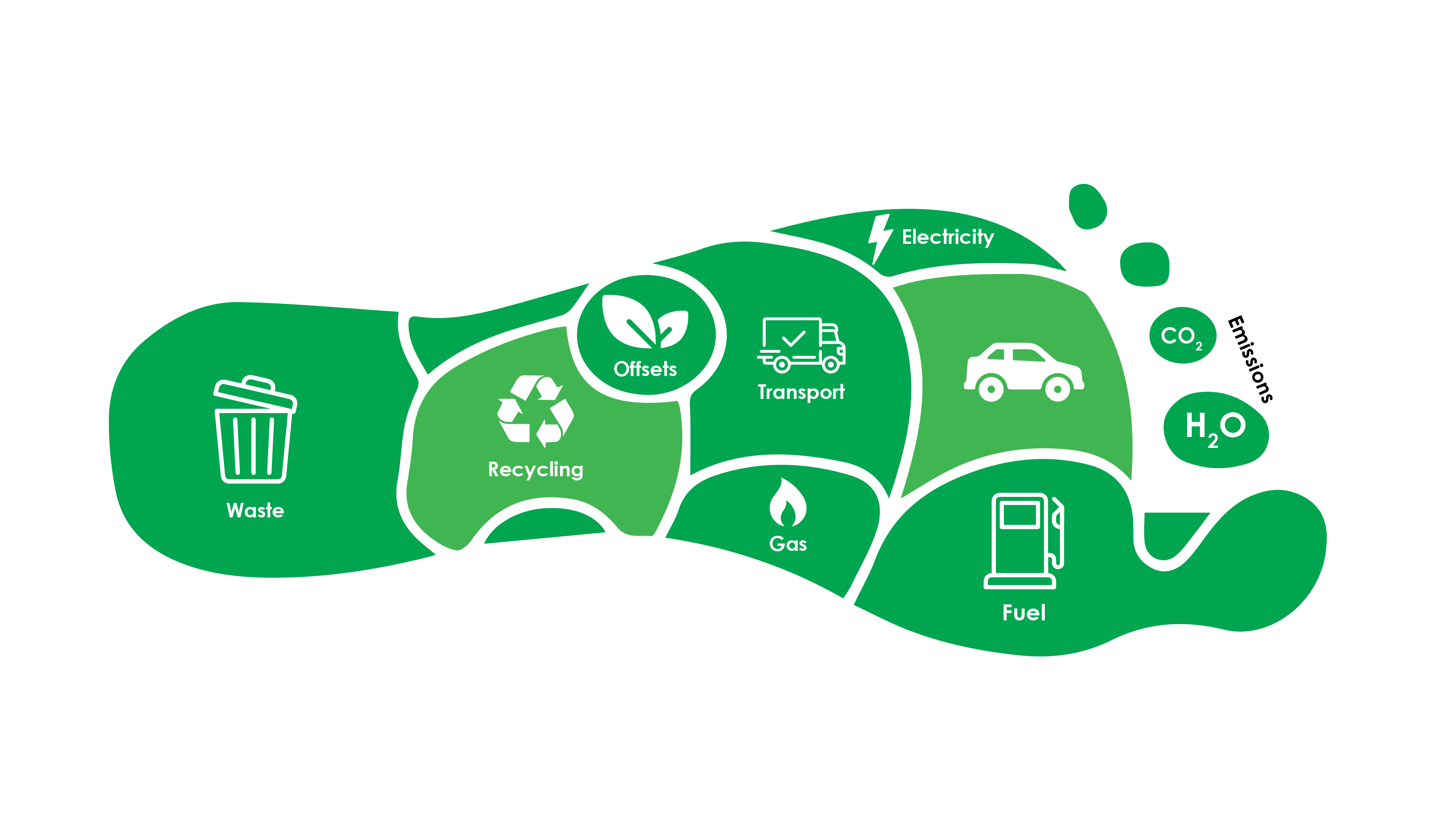
Your class has recently taken part in a debate on ways individual citizens can reduce their carbon footprints in order to combat climate change. Below are three of the methods discussed and some quotes from people who took part in the debate.

  • Changing our diets and eating habits 
  • Changing travel habits
  • Changing our shopping habits

Comments:

“Going vegetarian or vegan would be so hard for me, I couldn’t live without meat or cheese!”

“Airplanes and cars pollute so much, I cycle to work and try not to fly too often.”

“Fast fashion is terrible for the planet, people buy cheap clothes and sometimes don’t even wear them!”

Write an essay discussing and including at least two of the ideas in your notes. You should explain which method you think is most realistic for most people and give reasons to support your argument. You may make use of the opinions expressed in the debate but you should use your own words. Write your essay in 150 words considering the organisation of contents and the use of linking words.

Wednesday, 11 March 2026

Skills practice. Formal letter writing


https://engxam.com/handbook/how-to-write-a-formal-letter-email-c1-advanced-cae/

https://test-english.com/writing/b2/a-formal-letter-of-complaint-tips-examples-exercises/4/

Writing a formal letter of Complaint

Example

123 Filmore Road

Chadthorpe

Lancs.

5th September 2026

Feel Free Travel

253B Delaware Buildings

Portree
 

Dear Sir/Madam,

I’m writing to express my dissatisfaction at the service I received on my holiday with Feel Free Travel. My friend and I went on the 8-day tour of Greece, reference GR36A, from the 5th to the 13th of August and we were extremely disappointed with the accommodation and the food.

First of all, your brochure said that we would stay in ‘clean, mid-range hotels’. However, my bedroom was dirty in the Olympia Hotel, and the Opera Hotel was in a noisy and unsafe part of town, which made me feel very anxious.

Secondly, although the brochure stated that all meals were included, I was shocked by the food that we were served at the hotel restaurant. For lunch, we were given a small, squashed sandwich and a carton of juice. To make matters worse, when we complained to the tour guide, we were told to buy more food at the supermarket.

I feel that I am entitled to a refund to compensate for this terrible service.

I look forward to hearing from you soon.

Yours faithfully,
Julie Watkins

 
➪ Explain that you are making a complaint and state what you want to happen next.

➪ Use adjectives to show your feelings

➪ Use connectors to move from one problem to the next

➪ Use passive voice to explain what happened to you

➪ Use reported speech to describe information from a website, brochure, etc.

Asking for information

Read the following formal email and check the different parts and the language used.

 
➪ Greeting and signature or closing line. These are the first and last lines of an email or letter.

➪ Opening line in the first paragraph, where you state your reason for writing, and closing line in the last paragraph.

➪ Asking for information.

➪ In formal letters, use indirect questions instead of direct questions.

➪ Discourse markers used to order our points.

Elements of a Formal Letter

When you write a formal letter, you should include these elements:

  • Write your own address in the top right-hand corner
  • Write the date under your address
  • Write the address of the recipient, i.e., the person you are writing to, on the left-hand side, below your address
  • Start the letter with Dear… if you know the name of the recipient or  Dear Sir / Madam if you don’t know the name of the recipient.
  • Sign off your letter with Yours sincerely if you know the recipient, or with Yours faithfully if you don’t know the recipient.

The structure of a letter of complaint

Your letter should be divided into paragraphs. In the first paragraph you should:

➟ Explain that you are making a complaint.

  • I wish to complain about the service I received on my holiday.
  • I am writing to complain about…
  • I am writing to express my strong dissatisfaction at…

➟ Give essential details such as the location, time and any reference numbers of the incident.

  • My friend and I went on the 8-day tour of Greece, reference GR36A, from the 5th to the 13th of August. 

➟ Introduce what you are complaining about.

  • …and we were extremely disappointed with the accommodation and the food.

In the next paragraph(s) give further details of the problem. If there were several problems, use connectors like Firstly, Secondly, Additionally, Furthermore, To make matters worse, Finally, to move from one problem to the next.

End your letter by stating what you want to happen next. Here are some useful phrases:

  • I insist that you give me a refund to compensate for this terrible service.
  • I expect a full refund. 
  • I must insist on a refund of (the cost of)…
  • I demand compensation for…
  • I hope you will take the necessary steps to…
  • I feel that you should…
  • I feel that I am entitled to a refund.

Describing what happened to you (Passive Voice)

Usually, you have a bad experience because something happened to you – you didn’t do something yourself. For example, in the sentence:

  • For lunch, we were given a small, squashed sandwich and a carton of juice.

The writer did not do anything. Someone else gave the writer a small, squashed sandwich and a carton of juice. And in the sentence:

  • We were told to buy more food at the supermarket.

Someone else told the writer to buy more food.

In this situation, it’s common to use the passive voice in formal writing.

When complaining about a past situation, use the past simple passive: was/were + the past participle of the main verb.

  • We were given…
  • We were told…
  • I was assured…
  • I was ignored…
  • I was charged…

You may also need to use the past perfect passive: had been + the past participle of the main verb.

  • I realised that we had been given…
  • I noticed that I had been charged…

If you want to include who did the action, use the preposition by.

  • We were told by the tour leader to buy more food at the supermarket.

Describing printed information (Reported speech)

In your letter, you can refer to information printed in a brochure or advertisement. To do this, you should use reported speech. You can do this using phrases like:

  • The brochure stated that…
  • The advert said that…

Imagine what is written in the printed information. For example:

‣ “All meals are provided.”
‣ “You will stay in clean, mid-range hotels”.

When you report this information in your letter, use reported speech and change the present tense to the past tense, and change will to would.

  • “All meals are included”. ➪ The brochure stated that all meals were included.
  • “You will stay in clean, mid-range hotels”. ➪ The brochure stated that we would stay in clean, mid-range hotels.

Contrasting printed information with your experience

In your letter, you can contrast the information in a brochure or advert with your own experience by using link words like although and however.

  • Your brochure stated that we would stay in ‘clean hotels’. However, my bedroom was dirty in the Olympia Hotel.
  • Although the brochure stated that all meals were included, we only received lunch twice during the holiday.

🔍 Note that we use however and although in different ways. However is normally used at the beginning of a sentence, before a comma (,) and after a full stop (.) or a semicolon (;). Although can be used at the beginning or in the middle of a sentence. We do NOT use a comma after although; we use although + subject + verb.

  • We had a good time. However, we didn’t like the hotel.
  • Although we had a good time, we didn’t like the hotel.

Describing feelings and situations

You can use adjectives to show how you felt during a situation such as:

  • surprised (at)
  • shocked (by)
  • disappointed (with)
  • anxious (about)
  • worried (about)
  • confused (by)

You can add adverbs like very or extremely to make the feelings stronger.

  • We were extremely disappointed with the accommodation and the food.
  • I was shocked by the poor quality of the food.
  • I felt very anxious about my safety.

You should also use adjectives to describe the problems you experience. Choose adjectives that describe the situation clearly.

  • The hotel was cheap and poorly maintained.
  • It was in a noisy and unsafe part of town.
  • The bedroom was dirty. The sheets were stained.
  • The sandwich was small and squashed. It was not fresh.  
  • The tour leader was rude and unhelpful.
  • The bus was uncomfortable.
  • The brochure was inaccurate.

You should describe your dissatisfaction and frustration about the events, but you should always keep a calm and polite tone if you want your letter to be effective.

Useful phrases

Useful phrases for a formal letter: (use as set phrases in the exam, don´t experiment with new vocabulary or grammar)

Greetings

Dear Sir or Madam
Dear Mr Jenkins
To whom it may concern,

Beginning:

With regards to the letter/email on…
With reference to your letter/email…
After having received your letter/email…
I received your address from … and would like …
Thank you very much for your letter/email on…
I have been given your contact details by… and I would like to…
In reply to your letter/email of…

Reason for writing

I am writing with regard/reference to … 
I am writing to express (my concern about/ disappointment with/disapproval of/apologies for)
I would like to draw your attention to/point out …

Referring to their letter 

As you stated in your letter, …
Regarding… Concerning … With regard to…

Complaining 

I am willing to compiain about …
You said …but in fact what happened …

Introducing points

(I feel) I must also (dis)agree with …
I should also like to point out that …
Your (article) states that … However,…

Request for action

I would appreciate it/be grateful if you would …
I look forward to receiving/seeing …
I trust/very much hope you will …
I would be grateful if you could…
Could you please provide details on…
I would appreciate information regarding…
In the light of this, I would advise…
Given the situation, I would suggest…
The best solution would be to…
In order to improve …… it is necessary to..
This will have an impact on …….

Ending:

I hope to hear from you soon…
If you require any further information, feel free to contact me
Should you require anything else, do not hesitate in contacting me
I look forward to hearing from you soon.
Thank you in advance for your assistance.
I trust that this information will be helpful.

Example: 

Dear Sir / Madam,

I wish to complain about my experience at your restaurant. I visited there with my family on Friday 9 March at 7 pm, and I was very disappointed with the service we received.

Firstly, we had to wait twenty minutes for someone to take our order. When the waitress finally took our order, we were told that the food would take fifteen minutes to arrive. However, it took forty-five minutes. When we complained to the waitress, she did not offer any kind of compensation.

Secondly, although we had a voucher which stated that we would get £10 off the price of our meal if we spent over £50, the waitress said that we could not use it because the offer had expired. I was extremely surprised and annoyed about this because there was not a date on the voucher.

I demand some compensation for this disappointing experience.

Yours faithfully,

(Whosoever)

Writing task. (javier.martinez@educantabria.es Deadline Mon16th march). ________________________________________________

Volunteers needed

We are looking for volunteers to help out at a famous, international sporting event.
We’re looking for friendly, respectful people with good language skills, good team skills and a ‘can-do’ attitude. We need people to welcome delegates, provide customer service and solve problems. If you think you have what it takes, apply now.

Write an application to become a volunteer. Mention:– your language skills

– your personal qualities
– examples of times when you have demonstrated team skills
– any relevant work experience


Asking for information

On a recent holiday, you lost a valuable item. Fortunately, you have travel insurance to cover the cost of anything lost. Write a letter/email  with a formal style to the manager of your insurance company. In your letter:

– describe the item you lost
– explain how lost it
– tell the insurance company what you would like them to do.


Unexpected online order

Recently, you ordered several books from an online bookstore, which provides good value service (delivery time and porice). Unfortunately, when you got the books, you realised they were not the price you had ordered on the wbsite, the pakage was broken and the books were damaged .

Write a complaint letter to customer service. In your letter:

– describe the items you ordered and what you got. Ask to return/new copies 
– explain the items are in bad condition
– mention you also paid for an insurance covering damages or delays

Write your email in an appropriate style asking for a refund/discount/compensation .

C1 Advanced (CAE) Formal Letter/Email: Structure

1. Salutation 
Dear Sir or Madam, Dear Mr Jenkins
2. The first paragraph (opening)
The reason why you’re writing this letter / the topic
3. The next paragraphs (main content)
Organise all the essential information in a clear and logical way.
4. Closing
Restate purpose and make a polite request or closing remark.
5. Sign-off
Yours faithfully, / Yours sincerely, [Your Name]