Sunday, 15 November 2020

Word building (THE LOGICAL SONG)

 Add a word that is derived from the one between brackets.

1. You can rely on Jane. She is very………………… (depend)
2. That rule is not ………….. …in this case (apply)
3. Don’t tell anyone. This is …………… (confide)
4. Librarians spend a lot of time …… their books (class)
5. Despite his …….…………Stevie Wonder managed to become a top pop singer. (able)
6. In wartime there is often a …….. ….…of food. (short)
7. See Mr Baker. This matter is his ………………… (response).
8. The company got more than 20 ……………….. (complain)
9. What ….. ………………do you need for this job? (qualify)
10. It is ……………. to take credit for other people’s ideas. (moral)
11. The price is £5, excluding ……………… and packing. (post)
12. I spent my ………………. in the country. (child)
13. People who smoke ……………….. their children to do likewise. (courage)


KEY

1. dependable
2. applicable
3. confidential
4. classifying
5. disability
6. shortage
7. responsibility
8. complaints
9. qualifications
10. immoral
11. postage
12. childhood
13. encourage

THE LOGICAL SONG-SUPERTRAMP

Taken from Supertramps’s 1979 album Breakfast In America, this is one of their best known hits. The song is about a man who is taken away from the unspoilt immediacy of childhood, undergoes education and sees a future prepared for him lacking any spontaneity of reaction. He feels constricted in his freedom of speech, is put under pressure to conform and ends up confused, without a coherent self-image. 

La letra es una «historia de inocencia e idealismo perdido»​ en la que Hodgson condena a un sistema educativo no basado en el conocimiento y la sensibilidad.​

La canción cuenta la historia de un hombre que:

  • Se siente lejos de una niñez pre-adánica, inocente y feliz:
    • «When I was young, it seemed that life was so wonderful, a miracle, oh it was beautiful, magical».
    • (Cuando era joven, parecía que la vida era tan maravillosa, un milagro, ¡oh, era bella, mágica!).
  • Fue sometido a una estricta educación:
    • «But then they sent me away to teach me how to be sensible, logical, responsible, practical».
    • (Pero entonces me mandaron lejos para enseñarme a ser sensato, lógico, responsable, práctico).
  • Ve un futuro preparado para él sin ninguna reacción espontánea:
    • «And they showed me a world where I could be so dependable, clinical, intellectual, cynical».
    • (Y me enseñaron un mundo donde podía ser tan confiable, frío, intelectual, cínico).
  • Se siente coartado en su libertad de expresión:
    • «Now watch what you say or they'll be calling you a radical, liberal, fanatical, criminal».
    • (Ahora mira bien lo que dices, o te llamarán radical, liberal, fanático, criminal).
  • Es presionado para conformarse:
    • «Won't you sign up your name, we'd like to feel you're acceptable, respectable, presentable... a vegetable!»
    • (¿No firmarás con tu nombre?, nos gustaría pensar que eres aceptable, respetable, presentable..., ¡un vegetal!).
  • Y termina confundido, sin una imagen coherente de sí mismo:
    • «Please tell me who I am, who I am, who I am!»
    • (Por favor dime quién soy, quién soy, quién soy!).


https://twitter.com/bbcpress/status/876133103441334272?s=08

Karmarama - Cbeebies – 'Everyone’s Welcome'

The Art of Inclusion 
Essential Question - Why is inclusion of cultures important?
Lesson Plan  |  PowerPoint

Check the image gallery and match the pictures with the quites which describes them best:

https://www.embracingourdifferences.org/gallery/2020-gallery/

  1. There is splendor in individuality and strength in diversity.
  2. True inclusion is when everyone is not only invited to the table, but encouraged to contribute to the meal.
  3. The same hand that holds a gun and starts war, can hold a pencil and start peace.
  4. If you are given the choice of "being cool" or "being kind," choose kind.
  5. If you stand by, then who will stand up?
  6. A difference isn't a challenge; it's an opportunity.
  7. I dream of a world where all people treat each other with respect and dignity regardless of their differences.
  8. Destroying someone else's sparkle doesn't make you shine brighter.
  9. The American Dream: Don't speak about me when all you know is my name and not my story.
  10. If I tell you my story, will you walk with me and not run?
  11. When children cry, they don't care about the color of the hand that reaches out; they just want one to hold.
  12. Become an encouraging voice in someone's hopeless silence.
  13. Let's work together to change the "except" into "accept."
  14. We can undo many things, but our words are not one of them.
  15. A nation is only as strong as its people; a people divided is a nation conquered.

Monday, 9 November 2020

Fake News controlled???

Fake news: What exactly is it?

            "Fake news" was not a term many people used 18 months ago, but it is now seen as one of the greatest threats to democracy, free debate and the Western order. It has been named the word of the year, raised tensions between nations, and may lead to regulation of social media. And yet, nobody can agree on what it is, how much of a problem it is, and what to do about it.

            Governments and powerful individuals have used information as a weapon for millennia, to boost their support. From a campaign of disinformation to aid victory in the final war of the Roman Republic to the 20th century, different forms of communication have been by governments. Added to that, as populations became more used to mass communication, they could more easily see through it.

            Before the internet, it was much more expensive to distribute information, building up trust took years, and there were much simpler definitions of what constituted news and media, making regulation or self-regulation easier. But the rise of social media has broken down many of the boundaries that prevented fake news from spreading in democracies. In particular it has allowed anyone to create and disseminate information.

            Facebook and Twitter allowed people to exchange information on a much greater scale than ever before, while publishing platforms like WordPress allowed anyone to create a dynamic website with ease. In short, the barriers to creating fake news have been undone.

            After widespread criticism that the companies are failing to deal with fake news, Twitter, Facebook and Google have all announced measures to crack down on misinformation online. Facebook, which has faced the most scrutiny, says it is enlisting fact checkers to flag stories, cutting off advertising to fake news sites, and better reviewing adverts on the site. Twitter says it has become better at dealing with bots, and Google has promised better algorithms to police YouTube.

            However, critics continue to argue that not enough is being done, and that the tech companies are reluctant to take action, for fear of being seen as biased.

            Spotting fake news isn't easy: a Stanford study last year found that students were shockingly bad at distinguishing between different types of material online, whether paid for, fake or legitimate. Facebook has a useful list of ways to spot fake news, which include checking other sources and a site's URL


TRUE/FALSE
1. An unusual URL can be a warning sign.
2. You should be suspicious of grammar mistakes.
3. You should ignore the choice of images.
4. You should register to find out who writes and supports the site.
5. You should see if news outlets you trust are reporting the same story.
6. If the same picture appears in a different context on other websites, it's a good sign.


Sunday, 8 November 2020

US Election 2020.

 Analysis of US Election 2020. Adapted from BBC News

https://www.theguardian.com/us-news/2020/nov/07/joe-biden-speech-us-election-win-kamala-harris

When America sneezes, the world catches a cold. 


Joe Biden has been elected president of the United States.

President-elect Biden now has 279 Electoral College votes, taking him past the 270 needed to win. Donald Trump has 214. Mr Biden will become the 46th president in January, pending the outcome of any legal challenges.

Mr Biden's running mate, Kamala Harris, will make history as the first woman vice-president, as well as the first black and the first Asian American vice-president. 

High turnout

Mr Biden is also leading the national popular vote with 50.5% to Mr Trump's 47.7%, a lead of over four million votes. The president-elect has received more votes than any candidate in US election history - just short of 75 million. Mr Trump has also increased his vote tally compared with 2016 by almost 8 million votes, to over 70 million this year. Preliminary figures show the highest turnout since 1900, with 66.4% of eligible voters turning out compared with 60.1% in 2016.

The figures suggest the proportion of total voters who are white has fallen by six percentage points on 2016, while remaining the largest group by ethnicity. The proportion of white voters backing Mr Biden has risen by five points on Hillary Clinton's figure at the last election, but Mr Trump still takes the largest share of this group, the preliminary polling suggests. Meanwhile, Mr Biden appears to have gained support among under 30s and the middle-aged.

key issues

Nationally, more than a third of voters said the economy was the most important issue in deciding who to choose as president, with a further 20% naming racial inequality and 17% saying the coronavirus pandemic.

However the issues were split along partisan lines with more than four times as many Trump voters saying the economy was the deciding factor, and Biden voters answering racial inequality and the virus. Voters were evenly split on how the US economy was faring, with 48% saying it was in "excellent or good" condition and 50% saying it was "not so good or poor".

Similarly, 50% said that the US was doing "somewhat or very badly" at containing the pandemic and 48% thought the country was doing "somewhat or very well".

The possibility of voter fraud has been raised repeatedly by the Trump campaign but a large majority of voters (87%) told the researchers they were confident that votes in their state would be counted accurately.

VOCABULARY TO USE (adapted https://www.cristinacabal.com/?p=14236)

  • Boost the economy
  • Harm/benefit someone or an organization
  • Put a strain on the finances of a country/area
  • Exacerbate a problem
  • Undermine the morale of citizens
  • Create divisions
  • Lead to tensions
  • Cut taxes
  • Extend working hours
  • Increase public spending
  • Abolish unemployment benefits
  • Allow a vote on independence
  • Increase penalties for…
  • Damage the economy
  • Resolve existing social problems
  • Rise of income inequality
  • Reform the education system
  • Solve social problems
  • Ensure prosperity
  • Hold an election
  • Rig the election
  • Stand for election
  • Floating voters
  • Popularity ratings
  • High/Low turnout

Monday, 2 November 2020

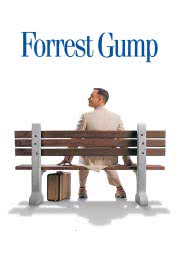
Forrest Gump. Working on inclusion

https://www.theodysseyonline.com/8-life-lessons-learned-from-movie-forrest-gump

https://www.youtube.com/watch?v=tvKzyYy6qvY&list=PLZbXA4lyCtqoatEfPacN-o7Wkt4p87Hu- 

SYNONYM MATCH

1.

epic

a.

earning

2

naïve

b.

won

3.

breathtaking

c.

totally

4.

magical

d.

fake

5.

thoroughly

e.

blockbuster

6.

grossing

f.

enthuses about

7.

adapted

g.

enchanting

8.

scooped

h.

innocent

9.

artificial

i.

awesome

10.

raves

j.

refashioned

PHRASE MATCH

1.

a 1994 epic comedy-drama

a.

slow-witted

2

based on the 1986 novel

b.

of pop melodrama

3.

naïve and

c.

between comedy and sadness

4.

a breathtaking balancing act

d.

of the same name

5.

I hated it

e.

box of chocolates

6.

the top

f.

dozens more awards

7.

It also scooped

g.

romance film

8.

You never know what

h.

grossing film

9.

an artificial piece

i.

thoroughly

10.

it's as sweet as a

j.

you're gonna get


Forrest Gump is a 1994 (1) __________________ romance film. It was based on the 1986 novel of the same name by Winston Groom. The film was directed by Robert Zemeckis and starred Tom Hanks. The (2) __________________ decades in the life of Forrest Gump, a (3) __________________ native of Alabama. The film shows how he witnesses, and in some cases changes, some of the most important events (4) __________________ the 20th century. One critic loved the film and wrote: "Hanks' performance is a breathtaking (5) __________________ comedy and sadness, in a story rich in big laughs and quiet truths....what a magical movie." Another film critic, Pauline Kael, stated: "I      (6) __________________."

Forrest Gump was the (7) __________________ North America released in 1994. It won the Academy Awards for Best Picture, Best Director, Best Actor, (8) __________________, Best Visual Effects and Best Film Editing. It also scooped dozens more awards. The line: "Mama always said (9) __________________ of chocolates. You never know what (10) __________________," was ranked 40th on the "100 Years..." list of the greatest 100 Movie Quotes. "Entertainment Weekly," writing in 2004, said many people see the movie "as (11) __________________ pop melodrama, while (12) __________________ that it's as sweet as a box of chocolates." In December 2011, Forrest Gump was selected for preservation in the Library of Congress' National Film Registry.

LISTEN:  MP3

Great Britain flag icon  Forrest Gump by John Escott

Forrest is a young kind-hearted man from Alabama in the USA. 

He has won a medal for gallantry in the Vietnam war. 

The President Of the United States awarded the hero. 

Forrest was a footballer, a businessman and a film star.

He also went in space. His best friend was an ape called Sue.

https://english-e-reader.net/book/forrest-gump-john-escott 

Saturday, 31 October 2020

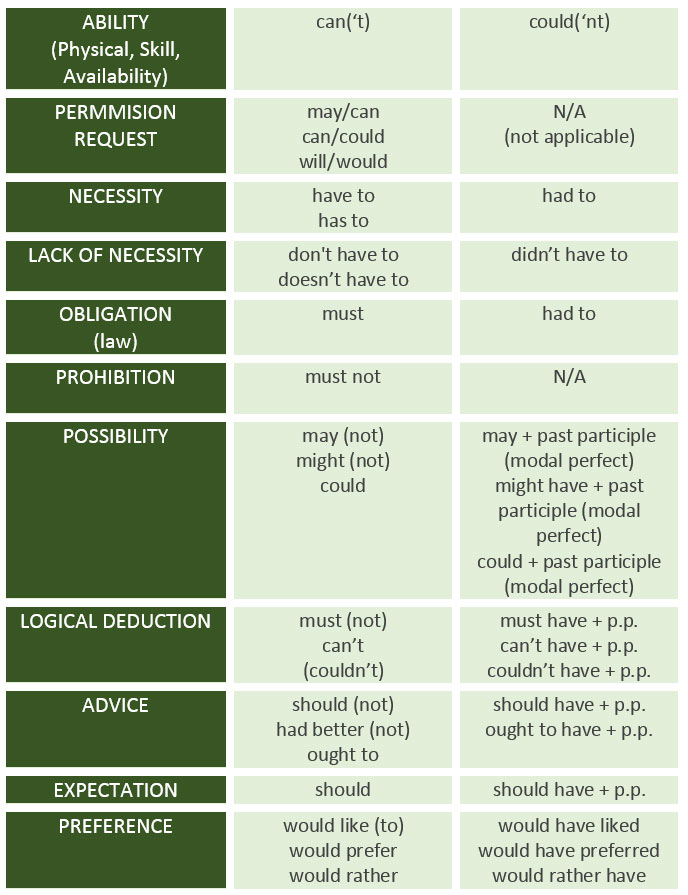
MODALS. REVISION


Modal verbs


The modal verbs include can, must, may, might, will, would, should. They are used with other verbs to express ability, obligation, possibility, and so on. Below is a list showing the most useful modals and their most common meanings:

Modal
MeaningExample
canto express abilityI can speak a little Russian.
canto request permissionCan I open the window?
mayto express possibilityI may be home late.
mayto request permissionMay I sit down, please?
mustto express obligationI must go now.
mustto express strong beliefShe must be over 90 years old.
shouldto give adviceYou should stop smoking.
wouldto request or offerWould you like a cup of tea?
wouldin if-sentencesIf I were you, I would say sorry.

Modal verbs are unlike other verbs. They do not change their form (spelling) and they have no infinitive or participle (past/present). The modals must and can need substitute verbs to express obligation or ability in the different tenses. Here are some examples:
Past simpleSorry I'm late. I had to finish my math test.
Present perfectShe's had to return to Korea at short notice.
FutureYou'll have to work hard if you want to pass the exams.
InfinitiveI don't want to have to go.
Past simpleI couldn't/wasn't able to walk until I was 3 years old.
Present perfectI haven't been able to solve this problem. Can you help?
FutureI'm not sure if I will be able to come to your party.
InfinitiveI would love to be able to play the piano.

Modals are auxiliary verbs. They do not need an additional auxiliary in negatives or questions. For example: Must I come? (Do I must come?), or: He shouldn't smoke (He doesn't should smoke).
Important: The explanations and examples on this page are just an introduction to this extensive and complex area of English grammar. Students of English who want to learn more should consult a good reference work, such as Swan's Practical English Usage.


Here is a list of modals with examples:
Modal VerbExpressingExample
mustStrong obligationYou must stop when the traffic lights turn red.
logical conclusion / CertaintyHe must be very tired. He's been working all day long.
must notprohibitionYou must not smoke in the hospital.
canabilityI can swim.
permissionCan I use your phone please?
possibilitySmoking can cause cancer.
couldability in the pastWhen I was younger I could run fast.
polite permissionExcuse me, could I just say something?
possibilityIt could rain tomorrow!
maypermissionMay I use your phone please?
possibility, probabilityIt may rain tomorrow!
mightpolite permissionMight I suggest an idea?
possibility, probabilityI might go on holiday to Australia next year.
need notlack of necessity/absence of obligationI need not buy tomatoes. There are plenty of tomatoes in the fridge.
should
ought to
50 % obligationI should / ought to see a doctor. I have a terrible headache.
adviceYou should / ought to revise your lessons
logical conclusionHe should / ought to be very tired. He's been working all day long.
had betteradviceYou 'd better revise your lessons

Remember

Modal verbs are followed by an infinitive without "to", also called the bare infinitive.

Examples:

  • You must stop when the traffic lights turn red.
  • You should see to the doctor.
  • There are a lot of tomatoes in the fridge. You need not buy any.


Grammar Exercise - Modals


Do the exercise on modal verbs and click on the button to check your answers

(Before doing the exercises you may want to read the lesson on modal verbs )

Choose the right modal verb

  1. There are plenty of tomatoes in the fridge. You  buy any.
  2. It's a hospital. You  smoke.
  3. He had been working for more than 11 hours. He  be tired after such hard work. He  prefer to get some rest.
  4. I  speak Arabic fluently when I was a child and we lived in Morocco. But after we moved back to Canada, I had very little exposure to the language and forgot almost everything I knew as a child. Now, I  just say a few things in the language.
  5. The teacher said we  read this book for our own pleasure as it is optional. But we  read it if we don't want to.
  6.  you stand on your head for more than a minute? No, I  .
  7. If you want to learn to speak English fluently, you  to work hard.
  8. Take an umbrella. It  rain later.
  9. You  leave small objects lying around . Such objects  be swallowed by children.
  10. People  walk on grass.
  11. Drivers  stop when the traffic lights are red.
  12.  I ask a question? Yes, of course.
  13. You   take your umbrella. It is not raining.
  14.  you speak Italian? No, I  .

Related pages: