No new dates for tests have been set yet, while pre-enrollment for schools also suspended.
The 2020 university entrance exams will be postponed across Spain due to the coronavirus crisis.
A decision to postpone the tests, known as the Selectividad or EBAU, was made on Tuesday after a videolink meeting of the Spanish education and university ministers, their regional counterparts, and university representatives.
A statement from the Spanish government emphasized the desire to avoid any "negative consequences" of the suspension of classes in schools because of covid-19.
The university enrollment calendar will also be adapted to the new dates of the exams, still to be determined.
Education officials have said they are now working on different scenarios depending on how long the confinement measures are extended.
The education and university ministries emphasized that they had to ensure that "no student will miss the course due to the current circumstances" and also "ensure that access to university occurs in a way that is fair and just for all."
School pre-enrollment also postponed. The pre-enrollment dates for both primary and secondary schools have been suspended until they can take place under normal conditions.
Gobierno, CCAA y rectores pactan aplazar la Selectividad a 217.000 estudiantes
Determinarán las nuevas fechas en función de cómo evolucione la pandemia. Las pruebas estaban previstas para antes del 19 de junio. "Ningún estudiante va a perder el curso", dice el número dos de Educación
Who Is St. Patrick?
St. Patrick is the patron saint and national apostle of Ireland. He was born in the fourth century and is famous for bringing Christianity into Ireland. St. Patrick’s Day is a very well known Irish national holiday, which is celebrated not only in Ireland but all around the world. It falls on the 17th of March. History of St. Patrick
St. Patrick was born to wealthy parents in the late fourth century. Until the age of 16 years old, he thought of himself as a pagan. He was kidnapped and sold as a slave at this age by Irish marauders. It was during this capture that he turned to God. He managed to escape after being a slave for six years and then studied in a monastery in Gaul for 12 years. This was when he knew that his ‘calling’ was to
try and convert all the pagans in Ireland into Christianity. St. Patrick went from monastery to monastery, successfully converting people to Christianity. The Celtic Druids were very unhappy with him and tried to arrest him several times but he always managed to escape. After 30 years of being a missionary in Ireland, he finally settled down in a place called County Down. He died on the 17th of March, AD 461.
Legend and Folklore
Shamrocks, leprechauns and the blarney stone are associated with St. Patrick’s Day. Shamrocks are threeleaved clovers found growing in patches on grass. You are thought to be lucky if you find a four-leaved clover, so do keep it if you ever come across one!
Leprechauns are little Irish fairies, and they are thought to work as shoe-makers for other fairies. The Irish say that if a leprechaun is caught by a human, he will reveal where he hides his pot of gold. On this day, pictures of shamrocks and leprechauns are hung everywhere. Some people even dress up as leprechauns complete with their big green hats!
The village of Blarney is situated northwest of the Irish village of Cork. Blarney comes from the Irish word ‘An blarna’, meaning the plain. Blarney Castle is a very famous castle in this village and is 90 feet tall. The world famous Blarney Stone is on the top story. It is said that if one kisses this stone, one will be given the gift of eloquence, meaning to have beautiful speaking abilities. Nowadays, the word blarney means the ability to influence and coax with fair words and soft speech without offending.
Legend also says that St. Patrick could raise people from the dead. He is well-known for driving the snakes out of Ireland, although many people dispute how true this is! Another great story was how he used the shamrock, with its three leaves, to explain the Holy Trinity (the Father, the Son and the Holy Ghost) to his followers.
What Do People Do on St. Patrick’s Day?
St. Patrick’s Day is celebrated world-wide with people dancing and singing in Irish pubs, watching St. Patrick’s Day parade, drinking ‘green’ beer, wearing green clothes and just generally having a good time. Children in Ireland have a tradition of pinching their friends who don’t wear green on this day! Traditional Food and Drink on St. Patrick’s Day
Corned beef and cabbage is what most people have on this day. Another popular dish is Irish soda bread and potato pancakes. Irish pub owners go crazy on this day, putting green food colouring into their beers and traditional Irish Guinness Stout is a sell out in all Irish pubs! People also drink lots of Irish coffee, which is made with warm whiskey, sugar, coffee and topped off with whipped cream.
Sounds delicious? It is! Irish Proverbs
The Irish have many proverbs but here are some favourites.
Better the coldness of a friend than the sweetness of an enemy.
Be nice to them on the way up. You might meet them all on the way down.
Let your anger set with the sun and not rise again with it. Irish Humour
The Irish are famous for their jokes and good nature. Here’s an example: Definition of an Irish husband: He hasn’t kissed his wife in 20 years but he will kill any man who does!
Now that you know almost everything about St. Patrick’s Day, go out on March the 17th and enjoy yourselves! Why not try and spot a leprechaun or two to find your pot of gold…? Whatever it may be, don’t forget to wear green on this special day! Read the article and answer the questions below about St Patrick’s Day... 1. When is St Patrick’s Day? 2. Why is this day celebrated as St Patrick’s Day? 3. Where is it celebrated? 4. When was St Patrick born? 5. What happened to St Patrick at the age of 16? 6. What did the saint see as his ‘calling’? 7. What is a shamrock? 8. What use did St Patrick make of the shamrock? 9. What is a leprechaun? 10. What should you do if you meet a leprechaun? 11. Where is the blarney stone and what is special about it? 12. What does the word ‘blarney’ mean today? 13. Did St Patrick drive all the snakes out of Ireland? 14. What should you wear on St Patrick’s Day? 15. What do children do on St Patrick’s Day? 16. What do people traditionally eat on St Patrick’s Day? 17. What do pub owners do on St Patrick’s Day? 18. What ingridients does Irish Coffe have? 19. How long was St Patrick a missionary in Ireland? 20. What is Guiness Stout?
This lesson plan is based on a very interesting video featuring Bill Gates who talks about what he is most concerned about in a global perspective. Surprisingly, it’s not some AI/tech-related issue but a pandemic scenario! Apart from a listening comprehension task, the worksheet also includes fear vocabulary exercises and some useful adjectives.
a) I ………………… to think what would happen if we faced another world war.
b) I rate the ………………… of an asteroid hitting Earth as fairly low.
c) It ………………… me that the risk of a nuclear war rises.
d) The sudden outbreak of a widespread epidemic is a nightmare ……………….
e) I don’t take an alien invasion ……………… as there is a very low probability of such an event.
f) I’m terribly ………………… about the future with scarce water resources.
g) I’m just …………… worried that a huge volcanic explosion could happen soon.
h) I find a gigantic earthquake that could affect millions of people overwhelmingly ………………… . i) I would ………………… uneasy about the future if I lived in tsunami-stricken areas.
Watch a short interview with Bill Gates
[http://bit.ly/WhatWorriesBill] and answer the questions below.
a) What are the chances of an epidemic worse than Ebola according to Bill Gates
in his lifetime?
b) What are the two types of flus?
c) Why is the Spanish flu called this way?
d) Why would any epidemic nowadays spread quicker than in the 20th century?
e) How big of an investment in preparing for an epidemic can make a difference?
Dear students, As we are trying to catch up with the news of this exceptional situation, here you´ll find suggestions and activities for these days. Remember that you will have to practise English as much as possible and go through the tasks proposed.
2nd ESO: Reading sections from the wrorkbook 1 to 5
4th ESO BIL: Reading and Writing leaflet from IGCSE
1st Bach: Reading sections from the wrorkbook 1 to 5
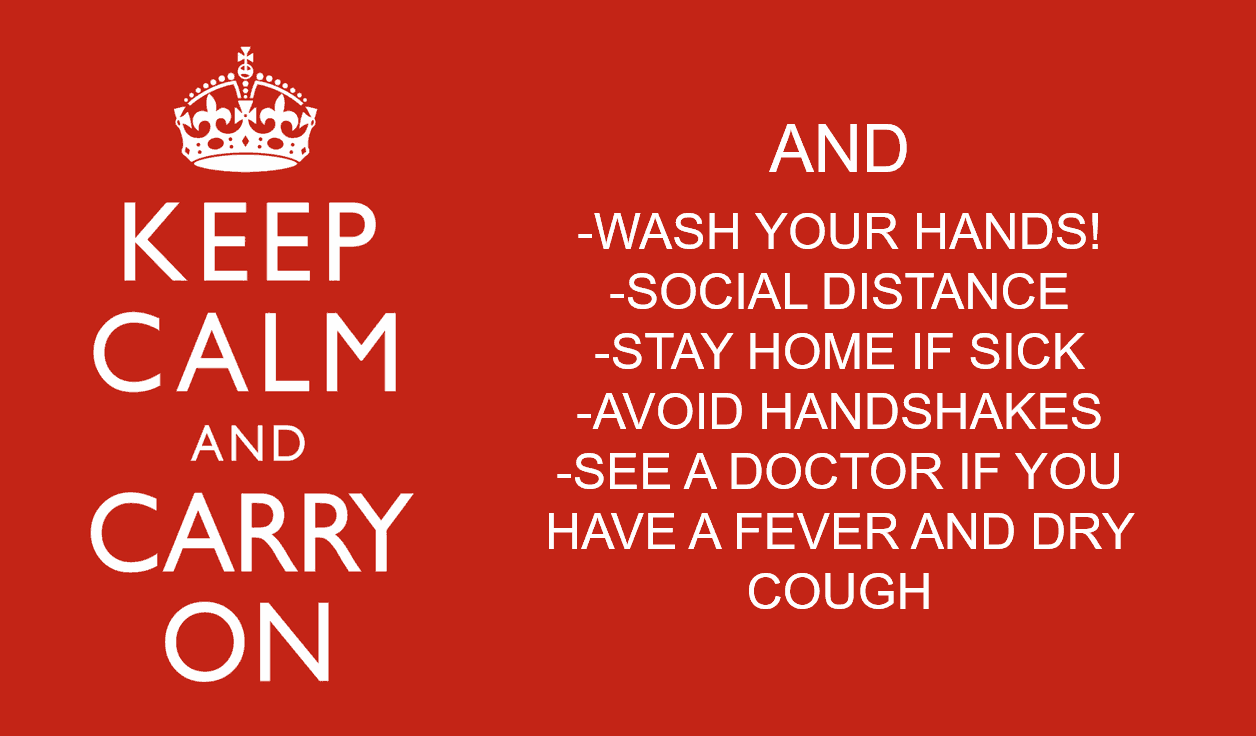
The very first one is CONTACTING YOUR TEACHER BY MAIL so that we can check communication on these premises. Please send a brief email indicating your name, group and acknowledgement of receipt. Then, quite frequently, the information will be updated in each section/course/group so that you can all access the tasks proposed for each specific group. Activities will also be delivered by mail once all the emails have been verified. Thanks for collaboration and we´ll keep in digital contact. Occasionally, we may aldo have online meetings using G-Suit and Google Calendar or direct link to the session which will also be published here: https://meet.google.com/_meet?pli=1&authuser=1 Take care, keep calm and carry on. All the best. Javier (ELT)
Following indications from the Educational Administration, schools will be closed from MON16 to MON30March 2020 in observance of Coronavirus Outbreak Emergency. Upcoming alerts will be updated as information is released or official news are published. Students will be able to check online language activities in each group section or the "home site" of this blog. For any questions, further info or submit your tasks, contact the teacher at javiermartinez@iescantabria.net. We apologize for the incovenience. Thanks for collaboration.
Aviso a estudiantes y familias. Tal y como ha establecido el Gobierno de Cantabria, los centros educativos permanecerán cerrados del lunes 16 al lunes 30 de marzo como forma de contención de los posibles contagios de Coronavirus. El alumnado podrá encontrar trabajo con diversas actividades de la lengua en la sección específica de cada curso o en la página central del blog. Para dudas y envío de tareas, pueden contactar en javiermartinez@iescantabria.net. Lamentamos las molestias y agradecemos la colaboración.
Japan and Hong Kong have closed their elementary, junior-high and high schools until April. Governments say they want to protect children from the COVID-19 coronavirus. Schools in Japan will remain closed until April the 8th, which is the start of the new school year. Children in Hong Kong will return to school on April the 20th at the earliest. Parents are now worried about the school closures. Working parents have to think about how to care for younger children. Grandparents will look after many children while their parents go to work. However, many children have no grandparents or extended family who live nearby. Parents may have to pay for expensive childcare fees.
Japan's Prime Minister Shinzo Abe shut the country's schools after a meeting of Japan's anti-virus task force. He said the next two weeks are critical to control the spread of COVID-19. He wants to "stem the risk of many children and teachers becoming infected through gathering for long hours every day". The government said it would urge public services and private companies to make it easier for people to take time off work to look after their children. An angry mother said: "I wonder if the government thinks it is OK to leave children at home alone for long hours." She asked: "What's the point of closing schools if parents are still commuting in packed trains in which passengers may have COVID-19?"
As the number of coronavirus cases continues to rise in Spain, authorities in
Madrid – one of the main infection points in the country – have ordered all
education centers to close for two weeks starting on Wednesday. The measure
will affect more than 1.5 million students at all levels of the school system,
from early education to universities.The decision came on Monday evening,
shortly after the Basque Country announced that all schools in the city of
Vitoria, another transmission hub, will also remain shut for the next 15 days.
If necessary, scheduled surgeries in the Madrid region will also be canceled,
along with non-essential medical appointments and tests.These measures were
announced by regional premier Isabel Díaz Ayuso, of the conservative Popular
Party (PP), in a bid to slow the spread of the coronavirus in the Madrid region.Also
on Monday, Health Minister Salvador Illa recommended that people work from home
in Madrid if they can, as well as in the Basque cities of Vitoria and Labastida.At
least 1,236 people had tested positive for the virus by the latest nationwide
count on Monday evening, and the death toll had climbed to 30, a significant
rise from the 10 deaths officially registered on Saturday.For the first time
since the beginning of the coronavirus outbreak in Spain, health authorities on Monday
admitted that the scenario has changed.With more than a thousand confirmed
cases by Monday afternoon, nearly twice as many as 24 hours earlier, there is
“obvious community transmission” in two regions, Madrid and the Basque Country,
said Fernando Simón, head of the Coordination Center for Health Alerts and
Emergencies.Authorities admit that this requires additional measures to those
that have been in force to date, namely isolating ill people and placing their
contacts in quarantine. Until recently, the majority of cases could be traced back to
specific locations and authorities were confident that the spread could be
contained.But the quick rise in infections and the existence of unknown
transmission hubs are triggering new measures such as school closures. In the
town of Haro, in Spain’s northern region of La Rioja, a few dozen people who
caught the virus at a funeral have been told to remain at home or face arrest
and hefty fines.
Picking up speed
Reported fatalities jumped from 10 on
Saturday to 17 on Sunday, while the number of confirmed infections grew 20%
over the same period. By Monday afternoon the death toll had reached 26, with
more than a thousand infections reported nationwide.Daniel López Acuña, a
former official at the World Health Organization (WHO), explained that the rise
in deaths is part of the normal evolution of the epidemic. “A few days have
elapsed since the beginning of the infection, and we are now starting to see
that expressed in terms of mortality among vulnerable people,” he said.All the
fatalities have been elderly people with underlying health problems. This
pattern underscores how senior citizens are the biggest at-risk group from a
disease where the mortality rate for other population segments ranges from low to
zero, in the case of young children, according to a study conducted in China.Although
every single region of Spain has reported the presence of the virus, 60% of
cases are concentrated in three of them: La Rioja, Madrid and the Basque
Country.
Enforcing the quarantine
In the small northern region of La
Rioja, world famous for its red wines, more than 81 cases have been reported,
most of them in the town of Haro. The source of the infection has been traced
back to a funeral held in the Basque city of Vitoria. On Sunday morning, Civil
Guard officers wearing protective gear showed up at these individuals’ homes to
inform them that they must refrain from leaving their houses or face hefty
fines of up to €600,000, or even be arrested and transferred to a hospital
under police surveillance. Health Minister Salvador Illa said on Sunday that
they are “not quarantined” but “under active surveillance” and must “remain in
their homes because that’s what medical protocols establish to prevent the
spread of the virus.”In the Basque Country, where there are over 149 reported
cases, the biggest concern is the fact that several health workers have been
affected, as the spread of the virus among this group could lead to staff
shortages at hospitals in the event of a surge in infections among the general
population.But the biggest hot spot is in the Madrid region, with more than 469
known cases and 16 deaths. Many of the new infections reported on Saturday can
be traced back to a senior center in the town of Valdemoro. The Madrid regional government on Friday ordered 213 private and public senior centers closed following the deaths of two people.The
source of some of the Madrid infections is still being investigated in a bid to
contain further spread. The region has also rolled out a home assistance
program so that ill people can stay in their houses instead of going to the
hospital. So far, a vast majority of the cases are mild enough that no
hospitalization is required.
Indicate whether the following statements are true
or false
1. Andrew went to Lithuania for dental work
2.British National Health Service (NHS) is not free
3.Figures have fallen double in the past 10 years.
4.NHS waiting list may reach up to 18 months
5.The most common procedures are cosmetic surgery and
dental work.
Answer the
following questions according to the information provided in the video report.
6.How do they qualify the British Health System? 7.How many patients are travelling abroad each year? 8.Which countries are mentioned as medical
destination? 9.What are the reasons the woman gives for health
tourism? 10.How much would Andrew´s treatment have cost in UK?