Describe the style that suits you best and add your opinion. You can also aupload your pic and comment on it. Deadline March7th.20
PHOTO-VOICE ETWINNING PROJECT: CLIMATE CHANGE:
For the final steps of this section, we´ll use the web and the tools to create live discussions on the topics you´ve worked on. Log in/register on VOICETHREAT:COM and you will be able to post your comments on the images that your mates have created. This is a speaking activity so be careful with the pronunciation and try to be short, concise (no more than 1m). You´ll have to include at least 9 comments on the slides of the projects which have been shared with you. You can check how the tool works simply watching this short tutorial: https://www.youtube.com/watch?v=6EnRwlDr4SY. Good luck and try to do your best to comment on the pictures which have been created. GIVE VOICE to your photos...PHOTOVOICE.
Reading fiction (such as novels and short stories) is more enjoyable than watching movies.
Some people prefer to read fiction. However, others like to watch movies because they consider it is more enjoyable. For several reasons, I think each of these options has its advantages.
It is clear that reading fiction brings many benefits. First of all, a book can be taken anywhere one goes. For example, while travelling or just taking a bus one can read a book. Secondly, reading is essential for children as it extends one's vocabulary, improves reading and even writing skills. What is more, it enlarges their range of interests, improves their imagination and helps them gain more knowledge and experience through books.
On the other hand, watching movies has many benefits too. To start with, movies usually have more influence on people, their behaviour and mood. In addition, watching a movie in a movie theatre gives many advantages such as sound effects, a large screen, etc. Besides, it is a good way to relax with one's friends, eliminate stress and tension and just have a good time. Also, watching movie takes less time than reading the whole book in most of the cases.
In conclusion, I think that there is no doubt that watching a movie is more enjoyable and impressive than reading a book. Nevertheless, reading a book brings more benefits for people in general. Moreover, children should spend more time reading books than watching different kinds of movies because scientists say that watching movies has much less use for the growing child.
Safer Internet Day (SID) is organised by the joint Insafe/INHOPE network, with the support
of the European Commission*, each February to promote the safe and positive use of digital
technology, especially among children and young people. Celebrated on the second day of
the second week of the second month, each year on Safer Internet Day millions of people
unite to inspire positive changes online, to raise awareness of online safety issues, and
participate in events and activities right across the globe.
Safer Internet Day aims to create both a safer and a better internet, where everyone is
empowered to use technology responsibly, respectfully, critically and creatively. The
campaign aims to reach out to children and young people, parents and carers, teachers,
educators and social workers, as well as industry, decision makers and politicians, to
encourage everyone to play their part in creating a better internet
DIGITAL MYTHS OR DIGITAL TRUTHS:
The more followers you have, the more popular you are
The internet is a great source of information
If you don’t upload a picture then it didn’t happen
Emojis help us to communicate feelings online
Everyone loves social media and being online
Everyone is happy online
If you don’t get likes onyour picture then you should delete it
It’s more important how you look online than offline
You can tell when someone is joking online
The internet impacts on your sleep
Read the online choices below and give a suggestion for how they could be improved in order to encourage positive posting. Instead of this…
Someone writes something mean under your post so you respond and defend yourself straight away
You don’t receive any likes on your picture so you delete it
Everyone seems to have more followers than you, so you change your account to public
Everyone’s pictures look really good so you start to edit yours before posting
You send your friend a message but they still haven’t responded even though they have
been online so you get really angry
You see that your friend has shared online that they are feeling down but you ignore it
You see that your friend always gets loads of likes on their pictures so you think you’re not as good as them
There has been a significant increase in organ donations due to the advancement of medical science. Organ donation is a process in which a person willingly donates an organ of his body to another person. Generally speaking, it can legally take place by the consent of the donor when he is alive or by the assent of the next of kin of a dead person. Within the European Union, the regulation of organ donation takes place by the member states. In fact, many European countries have some form of an opt-out system. Some examples are Austria, Spain, and Belgium. First of all, organ donation is very helpful for the grieving process. Furthermore, many donor families take relief and consolation due to organ donation. This is because they understand that their loved one has helped save the life of other people. Organ donation can also improve the quality of life of many people. Besides, donating organs could mean removing the depression and pain of others. What is more, organ donation could also remove the dependency on costly routine treatments. Organ donation is significantly beneficial for medical science research, since donated organs offer an excellent tool for conducting scientific researches and experiments. In addition, many medical students can greatly benefit from these organs and medical discoveries could result from organ donation. To sum it up, from my point of view, organ donation is necessary and useful. Therefore, it shows the contribution of an individual even after death and organ donation can also save plenty of lives. Extensive awareness regarding organ donation must certainly be spread among people.
Brexit: What will change after Friday, 31 January?
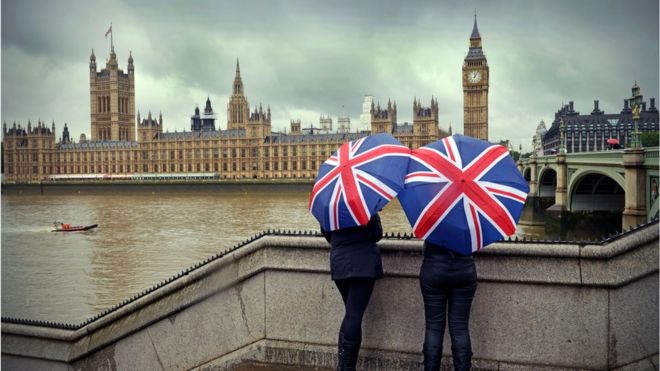
Image copyrightGETTY IMAGES
The UK formally leaves the European Union (EU) at 23:00 on Friday, 31 January. But it will immediately enter an 11-month transition period.
During the transition the UK will continue to obey EU rules and pay money to the EU. Most things will stay the same but there will be some changes:
1. UK MEPs lose their seats
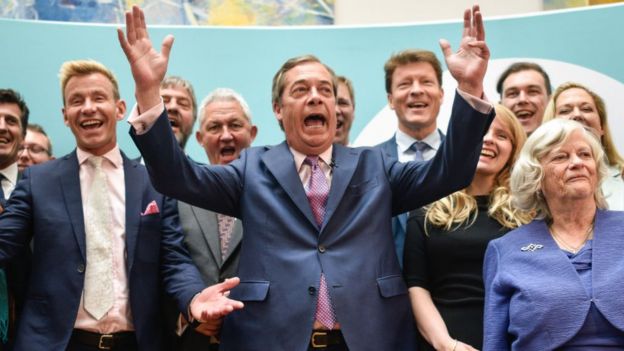
Image copyrightGETTY IMAGESImage captionThe Brexit Party won the most UK seats in the May 2019 European elections
Familiar faces such as Nigel Farage and Ann Widdecombe are among the UK's 73 MEPs who will automatically lose their seats in the European Parliament.
That's because, at the moment of Brexit, the UK will leave all of the EU's political institutions and agencies.
However, in addition to the UK following EU rules during the transition period, the European Court of Justice will continue to have the final say over legal disputes.
2. No more EU summits
UK Prime Minister Boris Johnson will have to be specially invited if he wants to join other leaders at EU Council summits in the future.
British ministers will also no longer attend regular EU meetings that decide things such as fishing limits.
3. We will be hearing a lot about trade
The UK will be able to start talking to countries around the world about setting new rules for buying and selling goods and services.
It has not been allowed to hold formal trade negotiations with countries like the US and Australia while it remained an EU member. Brexit supporters argue that having the freedom to set its own trade policy will boost the UK's economy.
There's also a lot to be discussed with the EU. Agreeing a UK-EU trade deal is a top priority, so extra charges on goods and other trade barriers aren't needed when the transition ends.
If any trade deals are reached, they won't be able to start until the transition period ends.
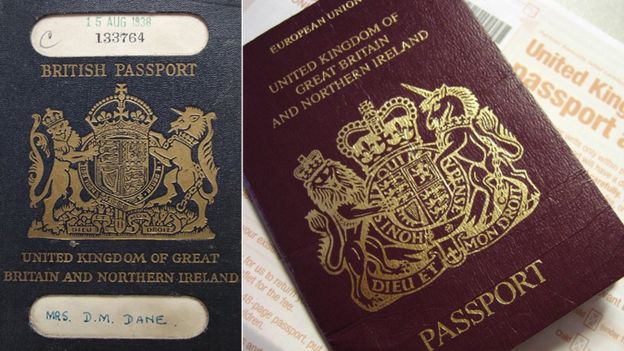
The new colour will be phased in over a number of months, with all new passports issued in blue by the middle of the year.
Existing burgundy passports will continue to be valid.
5. Brexit coins
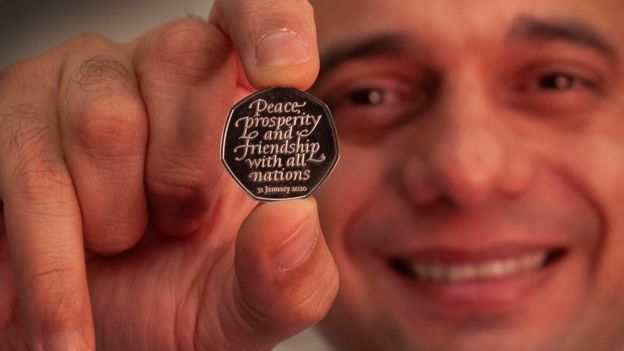
Image copyrightPA MEDIAImage captionThe coins had to be re-made after Brexit was delayed
About three million commemorative 50p Brexit coins bearing the date "31 January" and the inscription: "Peace, prosperity and friendship with all nations", will enter circulation on Friday.
The government had planned to introduce a similar coin on 31 October, the date Brexit was previously meant to happen.
However, those coins had to be melted down and recycled after the deadline was extended.
6. The UK's Brexit department shuts down
The team that handled the UK-EU negotiations and no-deal preparations will disband on Brexit day.
The Department for Exiting the European Union was set up by former Prime Minister Theresa May in 2016.
For the upcoming talks, the UK's negotiating team will be based in Downing Street.
7. Germany won't extradite its citizens to the UK
It won't be possible for some suspected criminals to be brought back to the UK if they flee to Germany.
Germany's constitution does not allow its citizens to be extradited, unless it's to another EU country.
"This exception cannot apply anymore after the UK has left EU," a spokesman from the German Federal Ministry of Justice told BBC News.
It's unclear if the same restrictions will apply to other countries. Slovenia, for example, says the situation is complicated, while the European Commission was unable to provide comment.
The UK Home Office says the European Arrest Warrant will continue to apply during the transition period. (That means Germany will be able to extradite non-German citizens.)
However, it adds that if a country's laws prevent extradition to the UK it "will be expected to take over the trial or sentence of the person concerned".
Because the transition period begins immediately after Brexit, the vast majority of other things remain the same - at least until 31 December 2020 including:
1. Travel
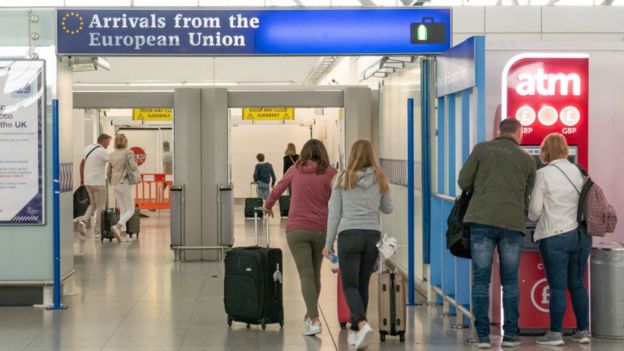
Image copyrightGETTY IMAGESImage captionUK nationals will still be treated the same as EU nationals during the transition
Flights, boats and trains will operate as usual.
When it comes to passport control, during the transition period, UK nationals will still be allowed to queue in the areas reserved for EU arrivals only.
2. Driving licences and pet passports
As long as they are valid, these will continue to be accepted.
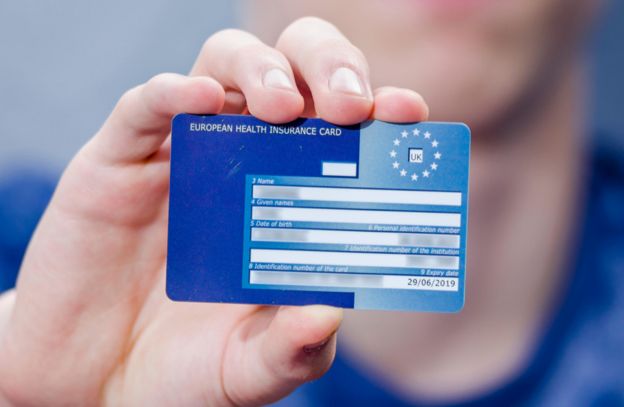
Image copyrightALAMYImage captionEHICs will still be valid during the transition
These are the cards that provide UK nationals with state-provided medical treatment in case of illness or accident.
They can be used in any EU country (as well as Switzerland, Norway, Iceland and Liechtenstein) and will continue to be valid during the transition period.