Tuesday, 2 April 2019

Grammar overview-Passive Voice

Use of Passive

Passive voice is used when the focus is on the action. It is not important or not known, however, who or what is performing the action.
Example: My bike was stolen.
In the example above, the focus is on the fact that my bike was stolen. I do not know, however, who did it.
Sometimes a statement in passive is more polite than active voice, as the following example shows:
Example: A mistake was made.
In this case, I focus on the fact that a mistake was made, but I do not blame anyone (e.g. You have made a mistake.).

Form of Passive

Subject + finite form of to be + Past Participle (3rd column of irregular verbs)
Example: A letter was written.
When rewriting active sentences in passive voice, note the following:
  • the object of the active sentence becomes the subject of the passive sentence
  • the finite form of the verb is changed (to be + past participle)
  • the subject of the active sentence becomes the object of the passive sentence (or is dropped)

Examples of Passive 

TenseSubjectVerbObject
Simple PresentActive:Ritawritesa letter.
Passive:A letteris writtenby Rita.
Simple PastActive:Ritawrotea letter.
Passive:A letterwas writtenby Rita.
Present PerfectActive:Ritahas writtena letter.
Passive:A letterhas been writtenby Rita.
Future IActive:Ritawill writea letter.
Passive:A letterwill be writtenby Rita.
ModalsActive:Ritacan writea letter.
Passive:A lettercan be writtenby Rita.

Examples of Passive 

TenseSubjectVerbObject
Present ProgressiveActive:Ritais writinga letter.
Passive:A letteris being writtenby Rita.
Past ProgressiveActive:Ritawas writinga letter.
Passive:A letterwas being writtenby Rita.
Past PerfectActive:Ritahad writtena letter.
Passive:A letterhad been writtenby Rita.
Future IIActive:Ritawill have writtena letter.
Passive:A letterwill have been writtenby Rita.
Conditional IActive:Ritawould writea letter.
Passive:A letterwould be writtenby Rita.
Conditional IIActive:Ritawould have writtena letter.
Passive:A letterwould have been writtenby Rita.

Passive Sentences with Two Objects 

Rewriting an active sentence with two objects in passive voice means that one of the two objects becomes the subject, the other one remains an object. Which object to transform into a subject depends on what you want to put the focus on.
SubjectVerbObject 1Object 2
Active:Ritawrotea letterto me.
Passive:A letterwas writtento meby Rita.
Passive:Iwas writtena letterby Rita.
As you can see in the examples, adding by Rita does not sound very elegant. Thats why it is usually dropped.

Personal and Impersonal Passive

Personal Passive simply means that the object of the active sentence becomes the subject of the passive sentence. So every verb that needs an object (transitive verb) can form a personal passive.
Example: They build houses. – Houses are built.
Verbs without an object (intransitive verb) normally cannot form a personal passive sentence (as there is no object that can become the subject of the passive sentence). If you want to use an intransitive verb in passive voice, you need an impersonal construction – therefore this passive is called Impersonal Passive.
Example: he says – it is said
Impersonal Passive is not as common in English as in some other languages (e.g. German, Latin). In English, Impersonal Passive is only possible with verbs of perception (e. g. say, think, know).
Example: They say that women live longer than men. – It is said that women live longer than men.
Although Impersonal Passive is possible here, Personal Passive is more common.
Example: They say that women live longer than men. – Women are said to live longer than men.
The subject of the subordinate clause (women) goes to the beginning of the sentence; the verb of perception is put into passive voice. The rest of the sentence is added using an infinitive construction with 'to' (certain auxiliary verbs and that are dropped).
Sometimes the term Personal Passive is used in English lessons if the indirect object of an active sentence is to become the subject of the passive sentence.

Grammar notes: https://inglescarmelitaslb.files.wordpress.com/2011/03/the-passive-voice1.pdf

Exercises

Exercises on Passive (Form)

Exercises on Passive (Active → Passive)

Exercises on Passive (Active or Passive)

Grammar in Texts

Tests on Passiv

Monday, 1 April 2019

Elections ahead. Food for thought. Language and ideas for Writing/Speaking


Elections and voting vocabularY (cLICK HERE TO FOLLOW THE LINK).

sites to get more info:

PROS AND CONS OF COMPULSORY VOTING


Only a few governments around the world impose compulsory voting or mandatory voting. These governments want to ensure high turnout of votes, promote voter awareness, and enhance democracy. On the other hand, making voting mandatory and even imposing penalties for not voting may be deemed as contradictory to freedom.
While it is true that in democratic countries, citizens have the right to suffrage, but some people argue that compulsory voting means enforced voting, and therefore voting is no longer a right but a duty.

LIST OF PROS OF COMPULSORY VOTING

1. Social participation
When voting is not mandatory, it often disenfranchises minorities – those people who are impoverished and uneducated. With compulsory voting, voting becomes a civic duty for all citizens, giving everyone a say in how the country or the government is run.
2. Improves Vote Turnout
When there’s low turnout of votes, the will of the majority is not achieved or represented. In some countries where voting is not compulsory, turnout of votes could slip below 50%, as compared with 70% to 90% in countries where there is compulsory voting. Come election time, compulsory voting encourages everyone to exercise their right and be represented.
3. Makes Voting Easy
To encourage participation in the elections, the government makes programs to facilitate voting in different parts of the country, even abroad. For instance in Australia, people who cannot leave work may vote on a Saturday, and in some countries there are postal voting and online voting for those abroad.
4. Reduces Political Polarization
With high turnout of votes and improved voter participation, compulsory voting also reduces political polarization. People and politicians are encouraged to act according to what the majority needs, and not according to the individual interests of their political party. This in turn, promotes political stability.
5. Fosters More Serious Election
When voting is not mandatory, some people take the right to suffrage for granted. But when it is mandatory with fines for non-participation, people begin to take elections more seriously to avoid the consequences. They, however, can cast black vote if they do not want to vote for any candidate.

LIST OF CONS OF COMPULSORY VOTING

1. Violates Freedom of Choice
For some people, voting should be a right not a duty. By making voting compulsory, there is a shift from civic right to civic duty, which is deemed a violation of one’s freedom of choice. Some people refuse to vote for a reason – it could be their form of political expression or that they simply do not know whom to vote.
2. Violates Religious Beliefs
Some religious groups discourage or restrict their members from participating in the elections. If voting is made compulsory, people who are bound to their spiritual beliefs are discriminated and violated.
3. Fosters Ignorant Voting
When people are forced to do something or suffer punishment, they tend to do it blindly out of fear. Electorate who are misinformed or uneducated may vote to avoid penalty, but in doing so, they may cast votes out of ignorance.
4. Does Not Guarantee Legitimacy 
A 100% turnout of votes does not guarantee 100% legitimacy of the government because there are always donkey votes, random votes and ignorance votes that make the election results more dubious.
5. Increases Costs
Elections need money. When there is compulsory voting, more people are expected to participate and to vote. This means that more election equipment, paraphernalia, and staff are required. The more voters there are, the greater the funds are needed for the elections.

Wednesday, 27 March 2019

Speaking activity- Interaction.

You will have to prepare a very short dialogue with a classmate on a specific topic given to you. Work in pairs and discuss about the main aspects trying to get an agreement, propose a solution for the problem or make suggestions about the possibilities, etc...Parts of the task:
  • Situation: 
  • Task: 
  • Time: 4 or 5 minutes (about 2 min. each candidate in balanced interaction/turn-taking)
Candidate A
  • Introduce yourself, start the conversation
  • Explain what the purpose / view.
  • Talk about the options
  • Try to see if you can convince Candidate B 
Some ideas on language functions you can use: introducing yourself, giving information, asking for info, describing, making proposals/suggestions, giving reasons, checking if the other person understands you.
Candidate B
  • Wait for the other person to start the conversation
  • Talk about your point of view.
  • Talk about the options
  • Try to see if you can convince Candidate A 
Some ideas on language functions you can use: introducing yourself, giving information, asking for info, describing, making proposals/suggestions, giving reasons, checking if the other person understands you.
Some examples for the Oral Test B1
Click on any of the links below and you will find authentic questions on that topic for each part of the IELTS speaking test. You will also find useful expressions, collocations, phrasal verbs and idioms to help you increase your range and get a higher band score!

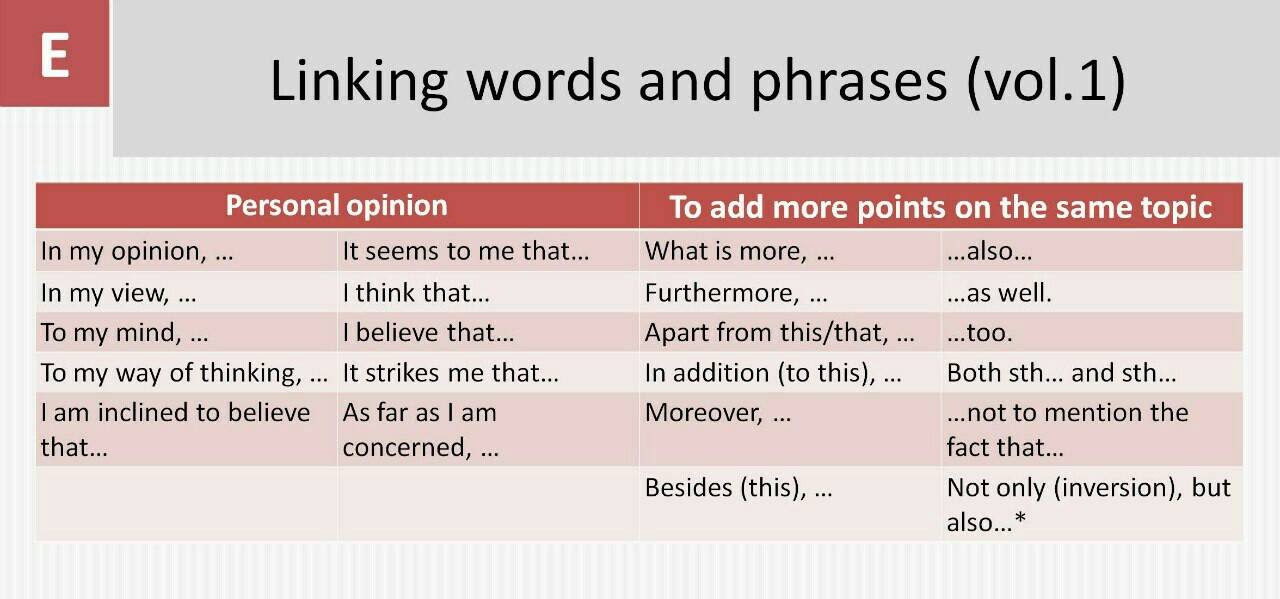
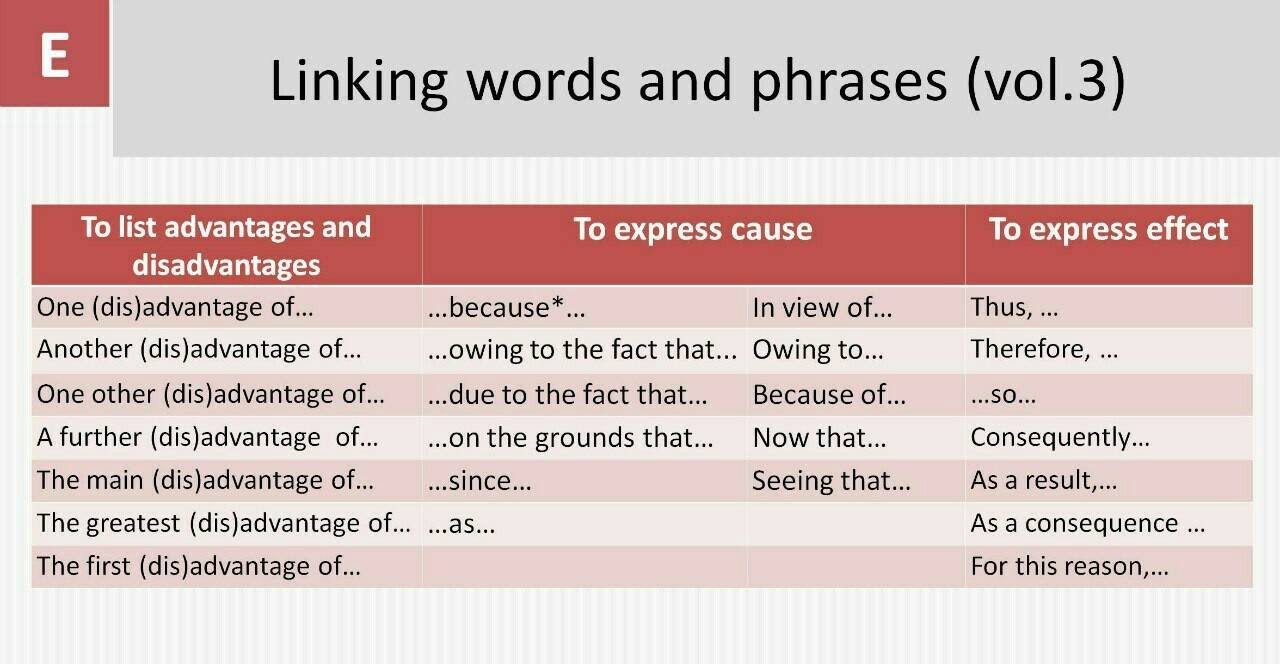
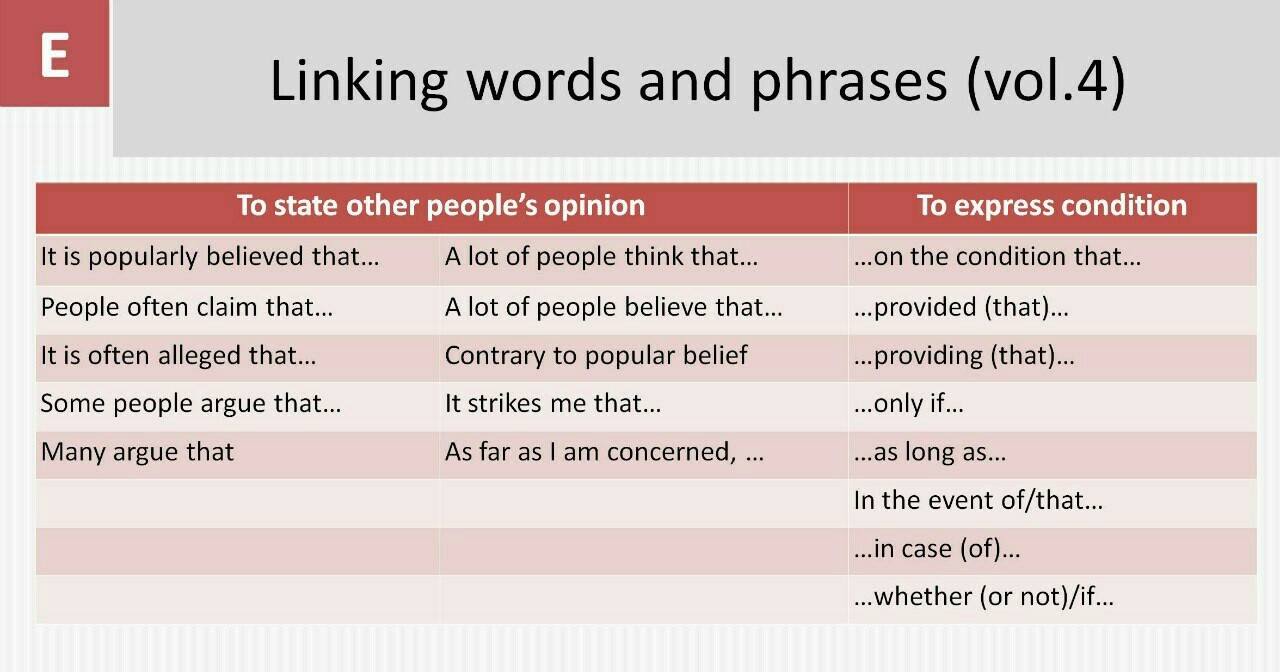
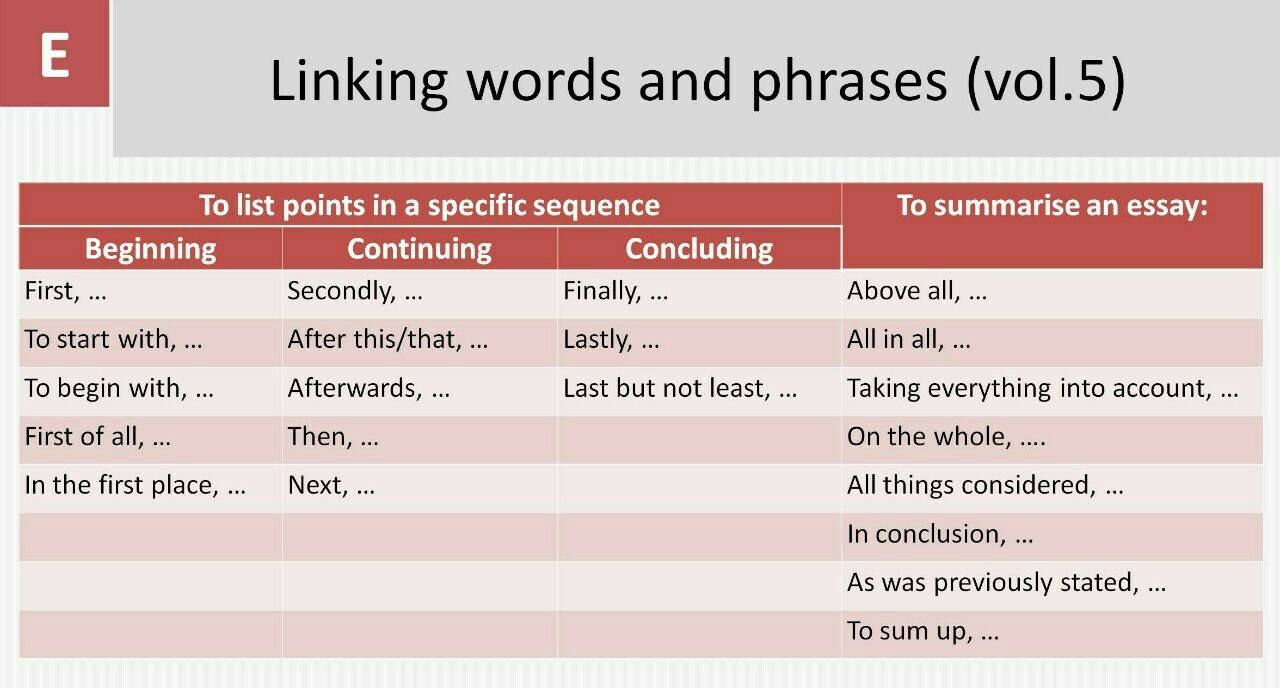
Linking words-Writing organization.

Thursday, 21 March 2019

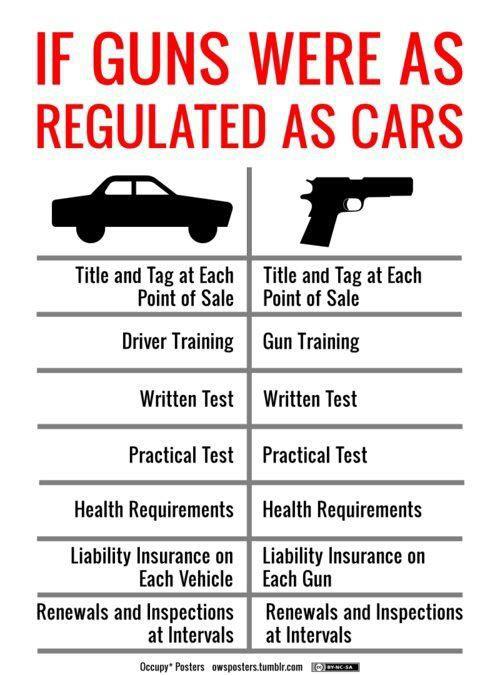
Writing: Dicussion essays. Guns control


Guns and Weapons.

Why guns should be legal:
In some countries, people are allowed to own firearms Individuals have the right to protect themselves
People can use guns in self defence
This deters criminals
Why gun ownership should be illegal:
There is a risk of accidents with guns
The number of violent crimes increases when guns are available
Criminals may be armed
The police then need to use guns
Suicide rates have been shown to rise when guns are available
Guns create violent societies with high murder rates
Why polices should use guns 
Many criminals use weapons
The threat of a gun can deter criminals
Police officers can forces a criminal to surrender
It is easier to arrest someone and avoid physical violence
The police may shoot violent criminals in self defence
They can protect the public
They can shoot an escaping criminal who poses a serious danger to the public
Why police should not carry guns
There is a risk of accidents and mistakes
The police might shoot an unarmed criminal or an innocent person
Accidents can happen in public places
There are several alternatives to guns (e.g tear gas, sprays and electric shock weapons)
Only special police units should use guns
Arm Trade: Positives 
The export of arms, or weapons, is an extremely controversial issue
Governments of rich, industrialized countries sell arms to each other
This industry creates jobs and wealth
The trade of weapons may improve relationships between governments
Arms Trade: Negatives 
Weapons may be used in conflicts and wars
The supply of arms could be responsible for deaths
Governments are promoting war in order to make a profit
Rich countries can influence the politics of other nations.

Writing samples:
In many countries, laws are quite flexible to let ordinary individuals carry firearms while in many other countries it is quite hard to get a license, even for a notable person, to own a gun. It is often said that when a state or country allows its citizens to carry weapons, the crime and violence rates increase there and I quite agree with this statement.
First, guns are meant to shot someone either to wound or kill him. Thus the very objective of a gun is to kill a person and thus this deathly weapon can only increase the crime and violence in a society. For example, we can compare a country like the USA, where carrying a gun is allowed, with a country like Japan, where it is restricted. In 2014, when the United States experienced over 18,000 gun-related homicides, Japan had only 14 and this is quite an alarming comparison that reveals how firearms ownership by mass people can increase violence in a country.
Second, research indicates that owning and carrying a gun can psychologically affect our behaviours and thus people often commit crimes only because they have guns with them. Accidental, psychological, and family violence gunshot wounds and death are quite high in many countries, especially where people can carry guns with them, and the only way to reduce such crime rate is to restrict the ownership of guns.
In conclusion, the only reason the authority would permit someone to carry a gun is to ensure the safety of this person. However, the reality is quite contrary and allowing people to carry guns is actually letting criminals also won it. Thus there is no doubt that people in a country should not be allowed to carry firearms and restricting it would significantly decrease the crime and violence.
COMPOSITION 2:

Whether normal citizens can have guns or not has been a frequent topic of discussion for a long period. Recent US gun shot which killed innocent children and responsible staff brought endless sorrow to the community and arouse the public's rethinking towards gun control.

Advocates, who maintain gun ownership is a civil right , hold on the belief that firearms play an essential role in self-defense. Specifically, as gun control laws and policy vary greatly around the word, some people from countries where rights to keep and bear arms are guaranteed by national constitution treat gun possession as individual liberties. Besides, researches have also shown that victims armed with a weapon are less likely to be murdered or robbed than those who don't have one when crime occurs.

Nevertheless, opponents suggest that the government should enact strict laws to forbid guns. Assault weapons easily accessible to the public , to some extent ,increase the rate of suicide and domestic violence . Generally speaking, suicide candidates have greater chances to kill themselves successfully with a gun at hand than others using alternative methods. Moreover, devastating harm caused by gunshot supports the notion that a federal ban on assault weapons should take effect. A weapon is so powerful that a criminal can shoot so many people in such short time. What's even worse, it seems to be more difficult to resist and overtake a criminal with a gun. Therefore, compared with other violence, serial gunshot normally lead to higher death toll . Overall, the availability of purchasing , trading and bearing guns puts the whole societal members under threat and disrupt the stability of the nation as a whole.

To sum up, whilw we may need guns for self protection, I personally stick to the latter opinion that guns are better controlled or even banned in public. Whereas in those countries where gun possession is historically legal, harsher measures should be taken to scrutinize the nation's gun laws, mental health system and the role that violent video games and movies might play in shootings.


Wednesday, 20 March 2019

Email writing

EBAU Practice- Reading

TAKING OLD CARS OFF THE ROAD
Barcelona will ban cars that are older than 20 years from the road during the week to cut traffic emissions by 30% over 15 years. The measure will come into force on January 1, 2019 and will cover Barcelona and the 39 neighbouring municipalities. Under the terms of the agreement, it will be prohibited to drive private cars registered before January 1997 and vans registered before October 1994 on working days. 
Although the ban will not be fully effective for two years, those same vehicles will already be banned from the roads during periods of high pollution from 1st December this year. The aim is to first reduce emissions by 10% over the next five years to gradually reach the levels recommended by the World Health Organisation. Then the adoption of the stricter measures will be implemented in order to reach the level set by the European Union before 2020. 
Janet Saiz, the city’s deputy for the environment said, “The people of Barcelona have told us clearly in surveys that they want to fight against air pollution because it is a health problem of the first order.” The city hopes to convince people to cooperate by offering free public transport to those who give up their vehicles. 
In a similar move last January, the Norwegian city of Oslo banned diesel cars from the road for two days in one particular week to combat rising air pollution. Many motorists were angered because they had been encouraged to purchase diesel cars by the state government just a few years before, when they were considered a better environmental choice than petrol cars. Drivers who did not obey the ban were fined around €200. A city councillor said at the time, “In Oslo, we can't ask children, the elderly, and those suffering from respiratory problems to stay at home because the air is too harmful to breathe.” 
Some Norwegians, however, were happy with the idea, like Kenneth Tempel, who wrote on Facebook, “Very good measure. We should introduce a permanent ban on diesel vehicles in all big cities. The fines should also be doubled.” According to the Norwegian Institute of Public health, air pollution causes 185 premature deaths in Oslo each year. 16 January 2017 and 7 March 2017, 

The Guardian (Adapted).

Question 1: Indicate whether the following statements are true or false and write down which part of the text justifies your answer. 
a) The ban will happen in Barcelona immediately. 
b) Cars registered before 1997 will not be banned at weekends. 
c) The people of Barcelona feel this is an important issue. 
d) The Barcelona authorities will not offer any incentive to make people comply with the ban. 
e) Kenneth Tempel believes the fines should be lower than they were.

Question 2: Find words or phrases in the text that correspond to the words and definitions given
a) Surrounding, closest (paragraph 1) 
b) Conditions (paragraph 1) 
c) More severe (paragraph 2) 
d) Without a charge (paragraph 3) 
e) Option (paragraph 4)

Question 3: Choose the correct option, a, b or c for each question and COPY the option chosen onto your answer sheet. 
1. The people of Barcelona..
a) were not told to give their opinion about the air pollution problem by the government. 
b) were asked their opinion about the air pollution problem by the government. 
c) were not asked their opinion about the air pollution problem by the government. 
2. Tempel believed that... 
a) a permanent ban on diesel vehicles should be introduced in all big cities. 
b) a permanent ban on all vehicles would not be beneficial in all big cities. 
c) a permanent ban on some vehicles should be beneficial in his city. 
3. A Norwegian driver caught ignoring the ban last January... 
a) had to pay a €200 fine. 
b) must not have paid a €200 fine. 
c) was paid a €200 fine. 
4. The Norwegian authorities... 
a) are used to believing that diesel cars were better for the environment. 
b) didn’t use to believe diesel cars were better for the environment. 
c) used to believe diesel cars were better for the environment. 

Question 4: Write a short essay (about 120-150 words) on the following topic: – In your personal opinion, what are the advantages and disadvantages of owning a car?