Wednesday, 15 January 2025

Passive voice revision

 Voz pasiva en inglés.

Estructura de la voz pasiva en presente simple

Aprender a usar la voz pasiva en inglés es un paso importante para cualquier estudiante de inglés. La voz pasiva es especialmente útil cuando el enfoque está en la acción o el resultado, y no en quién realiza la acción. En esta guía, explicaremos cómo usar la voz pasiva en el tiempo Present Simple, con ejemplos y ejercicios prácticos.

Veamos algunos ejemplos para entender la diferencia:

  • Voz activa: John writes the letter. (John escribe la carta.)
  • Voz pasiva: The letter is written by John. (La carta es escrita por John.)

Estructura de la voz pasiva en Present Simple

La estructura de la voz pasiva en Present Simple es sencilla y sigue este patrón:

  • Sujeto + verbo 'to be' (is/am/are) + participio pasado + [por + agente (opcional)]
Oración activa (inglés)Oración activa (español)Oración pasiva (inglés)Oración pasiva (español)
She reads the book.Ella lee el libro.The book is read by her.El libro es leído por ella.
The chef prepares the meal.El chef prepara la comida.The meal is prepared by the chef.La comida es preparada por el chef.
They repair the car.Ellos reparan el coche.The car is repaired by them.El coche es reparado por ellos.
We sell the product.Nosotros vendemos el producto.The product is sold by us.El producto es vendido por nosotros.
The artist paints the picture.El artista pinta el cuadro.The picture is painted by the artist.El cuadro es pintado por el artista.

Cómo formar oraciones en voz pasiva en Present Simple

Formar oraciones en la voz pasiva es muy fácil siguiendo estos pasos:

  1. Empieza con el sujeto (lo que recibe la acción).
  2. Usa la forma correcta del verbo 'to be' (is/am/are).
  3. Añade el participio pasado del verbo principal.
  4. Si es necesario, añade 'por' seguido del agente (quién realiza la acción).

Veamos algunos ejemplos del mundo real:

Oración pasiva (inglés)Oración pasiva (español)
The house is cleaned by the staff.La casa es limpiada por el personal.
The cake is baked by the chef.El pastel es horneado por el chef.
The report is written by the manager.El informe es escrito por el gerente.
The project is completed by the team.El proyecto es completado por el equipo.
The presentation is given by the speaker.La presentación es dada por el orador.

Cómo formar oraciones negativas en voz pasiva en Present Simple

Para formar oraciones negativas en voz pasiva, solo necesitas agregar 'not' después del verbo 'to be'.

  • Sujeto + verbo 'to be' (is/am/are) + not + participio pasado + [por + agente]
Oración pasiva negativa (inglés)Oración pasiva negativa (español)
The house is not cleaned by the staff.La casa no es limpiada por el personal.
The cake is not baked by the chef.El pastel no es horneado por el chef.
The report is not written by the manager.El informe no es escrito por el gerente.
The project is not completed by the team.El proyecto no es completado por el equipo.
The presentation is not given by the speaker.La presentación no es dada por el orador.

Preguntas en voz pasiva (Present Simple)

Para hacer preguntas en voz pasiva, invierte el verbo 'to be' y el sujeto de la oración:

  • Is/Are + sujeto + participio pasado + [por + agente]?
Pregunta (inglés)Pregunta (español)
Is the house cleaned by the staff?¿Es la casa limpiada por el personal?
Is the cake baked by the chef?¿Es el pastel horneado por el chef?
Is the report written by the manager?¿Es el informe escrito por el gerente?
Is the project completed by the team?¿Es el proyecto completado por el equipo?
Are the emails sent by the assistant?¿Son los correos enviados por el asistente?

Errores comunes en la voz pasiva (Present Simple)

  • Error: Usar una forma incorrecta del verbo 'to be'.
    Corrección: Recuerda que "is" se usa para sujetos singulares y "are" para sujetos plurales.
  • Error: Olvidar el participio pasado.
    Corrección: En la voz pasiva, el verbo principal siempre debe estar en forma de participio pasado.
  • Error: Omitir 'por' y el agente cuando es importante.
    Corrección: Usa 'por alguien' solo si es relevante para la oración.

Ejercicios: practica tus habilidades en voz pasiva

¡Ahora es momento de practicar lo que has aprendido! Prueba estos ejercicios para reforzar tu comprensión de la voz pasiva:

Ejemplos de uso Passive Voice - Present Simple

The steps are made of brick! - Los escalones están hechos de ladrillo.

Stamps aren't sold in a supermarket. - Los sellos no se venden en un supermercado.

The targets are assigned by the computer. - Los objetivos son asignados por la computadora.

This situation is not observed in the private sector. - Esta situación no se observa en el sector privado.

How is this procedure implemented? - ¿Cómo se lleva a cabo este procedimiento?

The atmosphere is divided into several layers. - La atmósfera está dividida en varias capas.

This idea is not based on anything - Esta idea no está basada en nada.

A house is divided into different rooms. - Una casa está dividida en diferentes habitaciones.

The entrance is hidden from human eyes. - La entrada está oculta a los ojos humanos.

Robots are made of metal. - Los robots están hechos de metal.

How is the plate made? - ¿Cómo se hace el plato?

Your flight is not authorized! - ¡Tu vuelo no está autorizado!

We feel that we are loved. - Sentimos que somos amados.

Are you armed? - ¿Estás armado?

It is saved in the database. - Está guardado en la base de datos.

He is wanted by the police. - Es buscado por la policía.

She's locked in the car - Ella está encerrada en el carro.

It's made of iron. - Está hecho de hierro.

Why are they hidden? - ¿Por qué están ocultos?

When do we use the passive?

The passive is more formal than the active and it is more common in written language. We often use the passive when we don’t know, when it is obvious, or when we don’t want to say who or what is responsible for the action. Let’s watch this video.

Present and past simple passive – form


Passive voice + by

 We can use by to say who or what is responsible for the action.

  1. The painting was bought by a very rich American
  2. Penicillin was invented by Alexander Fleming

Practice

Use this link to start revising the passive voice:

https://www.englisch-hilfen.de/en/exercises/active_passive/word_order.htm

Now, have a look at these sentences and how we change from active to passive. Then, do some activities.

https://www.englisch-hilfen.de/en/exercises/active_passive/sentences_simple_present.htm

Simple Past Passive

https://www.englisch-hilfen.de/en/exercises/active_passive/sentences_simple_past.htm

It’s time to enjoy a KAHOOT! Why don’t you agree to meet a classmate/s to play?

https://play.kahoot.it/v2/lobby?quizId=cd53066d-4d47-441b-b423-2666a1690d89

Finally, just to see that you have mastered the passive voice, in the link below, you have to do the three exercises, check them and send us (Nerea and Inés’ email) a picture of your final mark. GOOD LUCK! 🙂

Wednesday, 8 January 2025

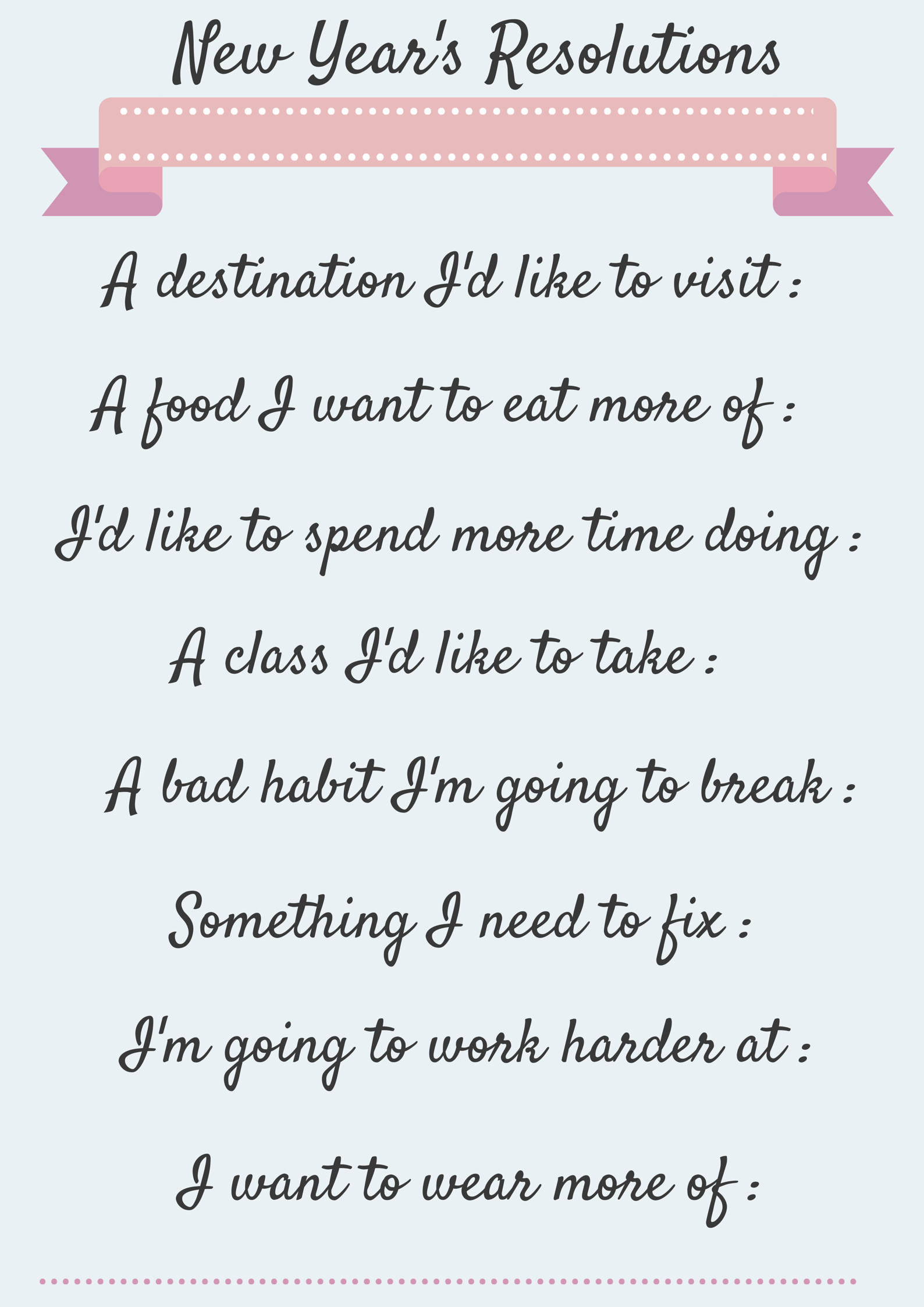
Happy New Year 2025

 HAPPY NEW YEAR 2025


A RESOLUTION is to resolve or determination to make a firm resolution to do something. 
The act of resolving or determining upon an action or course of action, method, procedure, etc; 
and the mental state or quality of being resolved or resolute: firmness purpose.

Wednesday, 18 December 2024

Xmas is coming. Funny English activities for Christmas

What do you know about Xmas?


What Do You Want for Christmas? | A Short Film from The Right Brothers on Vimeo.


Christmas Super Quiz Game
A quiz game for reviewing Christmas vocabulary.
Christmas Quiz Game        
Christmas Quiz Game (Nativity Story)

 Multiple Choice Questions


CHRISTMAS SONGS DOING AN EXCELLENT LISTENING PRACTISE??? HERE IT IS YOUR OPPORTUNITY WITH LYRICS TRAINING!!! GUESS AND HAVE FUN!!!


 BAAMBOOZLE??? 

Monday, 16 December 2024

European projects: Eco-connect

 European Projects: eTwinning/Erasmus+


EcoConnect Erasmus+ Project:

The global community is confronted with an unparalleled crisis: the climate emergency. Unlike other challenges, this crisis knows no borders or generational divides; it affects all of humanity. Climate change is a pressing issue that doesn’t just impact our future; it’s altering our present and endangering the delicate equilibrium of our planet. Our mission is to equip students with ecological literacy, a vital skillset for understanding and addressing these complex environmental issues. This project is SMART because it has Specific goals focused on ecological education, Measurable outcomes such as ecoliteracy and digital outputs, Achievable through planned activities and collaborations, Relevant to environmental concerns and Sustainable development, and Time-bound with clear deadlines for activities and reporting, ensuring effective implementation and impact.

 Meet at the following link: meet.google.com/fwf-zrus-eki


Tuesday, 3 December 2024

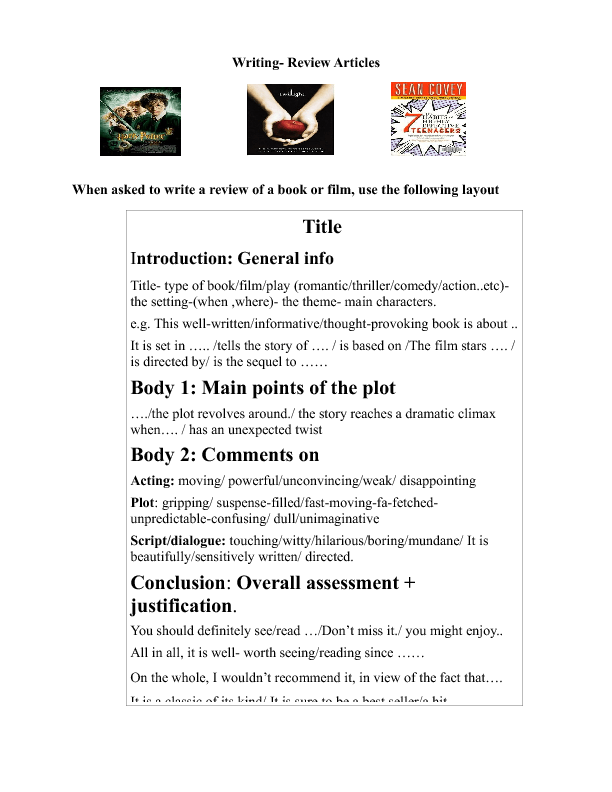
Writing a review. Linkers

https://www.liveworksheets.com/w/en/english-second-language-esl/674172

Useful vocabulary mostly used to organize information. Although it is taking a shortcut, if you learn several expressions for each paragraph in each type of text that could be on your exam, you will certainly be able to create a very consistent and well-organized text.

What I liked

What I liked most was …..
The thing I liked most was ….
I was pleasantly surprised by …..
 ….. would appeal to …..
 If you get a chance to ….

What I disliked

What I disliked most was …..
I was disappointed by ……
I was disappointed with …..
I was very disappointed by …..
 I was very disappointed with ….

Reviews of books:

main character
is set in
comedy
science fiction
thriller
romance
comedy:
author
written by
chapter
factual
fiction
unbelievable
bestseller
chapter
ending

Reviews of films, tv programmes, plays:

lead role
star role
star
star actor
star actress
starring
secondary role
He plays a …….
She plays a …….
written by ….
is set in …..
based on a true story ….
believable
true to life
not very believable
far-fetched
comedy
romance
science fiction
ending

Reviews of hotels, restaurants, etc:

location
service
setting
attractive setting
disappointing setting
owned by
run by
head chef (restaurant)
waiters (restaurant)
staff …….
staff at reception …….(hotel
hotel facilities ….
reasonable prices …..
good value for money …..
excellent value for money …..
expensive
a bit expensive
overpriced
not worth the money
poor value for money
always fully booked
book in advance

Criticism

The script seemed rather conventional/predictable to me.
The plot struck me as completely bizarre/absurd/incomprehensible
The characters are appealing and true to life
The dancers were quite brilliant/amateurish

Recommendations

I would strongly encourage you not to miss/not to waste your money on…
I would definitely recommend seeing/visiting/reading/having a look at …

 Example Download


https://test-english.com/grammar-points/b1-b2/clauses-contrast-purpose/

Thursday, 21 November 2024

Thanksgiving activities


The history of Thanksgiving

Thanksgiving combines the traditions of different groups of people. Travellers and migrants brought different religious traditions from Europe to the United States and Canada. Several celebrations are claimed as the first Thanksgiving. The best known is the celebration held by the pilgrims in what is now Plymouth, Massachusetts after their journey across the Atlantic Ocean on the famous Mayflower ship. Like the pilgrims, many groups held days of prayer, fasting or feasting to give thanks for successfully making the long boat journey. Later, settlers celebrated their successful harvest in a new land by holding feasts with their Native American neighbours. Over time, the Canadian and American traditions have become similar and developed into the modern holiday of Thanksgiving.

Thanksgiving today

In Canada, Thanksgiving is celebrated on the second Monday in October. In the United States, it is on the fourth Thursday in November. Although its origins are religious, today, Thanksgiving is a largely secular holiday. For most Americans and Canadians, it is a day for coming together with family and friends to share a large meal. It is an occasion to spend time with loved ones and express gratitude for the year that has passed. In many households there is a tradition of everyone seated at the table sharing what they are most grateful for.

Thanksgiving food

Thanksgiving is also about food. Thanksgiving dinner traditionally includes roast turkey, mashed potatoes, cranberry sauce and, for dessert, apple, pumpkin or pecan pies. Every family has its own recipes, sometimes secret recipes handed down through generations. Turkey, a bird native to North America, is the unofficial mascot of Thanksgiving, with roast turkey on the menu and turkey decorations on the wall. In the United States, a tradition of gifting turkeys to the President has more recently evolved into a humorous turkey ‘pardoning’. At this light-hearted ceremony, the President issues an official pardon for one or two turkeys, saving them from being cooked for supper.

More than food: football, parades and traffic jams!

Beyond food and gratitude, there are some unexpected sides to the American and Canadian holiday. One of these is football. This popular sport is an important part of the holiday, when families gather around to cheer on local or national teams. American football and Canadian football are both similar to rugby, played primarily not with the feet but with the hands.

Parades are another common part of the festivities. In the United States, the Macy’s Thanksgiving Day Parade takes place in New York City on the morning of Thanksgiving. It’s one of the world’s largest parades and is broadcast nationwide. A similar Thanksgiving parade happens in Canada as part of the Kitchener–Waterloo Oktoberfest, a multi-day autumn festival.

Unfortunately, heavy traffic is also common at Thanksgiving. In both countries, the week of Thanksgiving is one of the most popular travel times of the year, as everyone heads home to visit their extended family. So try to avoid any road trips if you’re visiting North America during this holiday!


https://learnenglish.britishcouncil.org/general-english/magazine-zone/thanksgiving

Test your knowledge of Thanksgiving history and tradition. 

1. Where did the Thanksgiving holiday originate? 
a. America
b. England
c. Ireland
d. Mexico
2. In 1621, Pilgrims at Plymouth Colony shared a harvest feast with which American Indian Tribe?
a. Chickasaw
b. Shoshone
c. Susquehanna
d. Wampanoag
3. What percentage of Americans eat turkey on Thanksgiving?
a. 39%
b. 50%
c. 88%
d. 99%
4. Where did turkeys originate?
a. Africa
b. Central Asia
c. North and Central America
d. Australia
5. In what city is the annual Macy’s Thanksgiving Day Parade? 
a. New York City
b. Macy, Ind.
c. Macy, Neb.
d. Pasadena, CA
6. Which president proclaimed Thanksgiving Day an official national holiday?
a. Thomas Jefferson
b. Abraham Lincoln
c. Ulysses S. Grant
d. John F. Kennedy
7. Each year, the president receives a gift of a live turkey and then “pardons” the bird during a ceremony at the White House. What happens to the pardoned turkey? 
a. It is set free to live in the wild
b. It is served at the president’s Thanksgiving dinner
c. It lives the rest of its life on a farm
d. It is auctioned off to the highest bidder
8. For many Americans, football is as much a part of Thanksgiving as are turkey and pumpkin pie. An NFL game has been played on Thanksgiving Day since what year? 
a. 1920
b. 1930
c. 1940
d. 1950
9.The day after Thanksgiving typically is the busiest shopping day of the year. The day often is referred to as: 
a. Thanksgiving Friday
b. Black Friday
c. Casual Friday
d. Super Friday
10. Which dessert was not part of the first Thanksgiving celebration? 
a. Pumpkin pie
b. Apple cake
c. Pecan pie
d. All of the above